



Feeding 9 Billion: Innovations in Agricultural Modeling
University of Southampton archaeologists Professor David Peacock and Dr Lucy Blue have just returned from a pioneering expedition investigating Roman sites in the East African country of Eritrea alongside colleagues from the University of Asmara. The University group is the first from the UK to work in the country since it won its independence more than a decade ago. They are already planning to return to this remote area on the shores of the Red Sea, previously part of Ethiopia.
Investigations centre on the ancient settlement of Adulis, which was known in Roman times as a fair sized settlement and mentioned in ancient chronicles as a key port in trade with India.
The researchers also believe they have found the site of the 6th century harbour of Adulis, known as Gabaza and a mausoleum called Samidi, both hitherto only known from documentary sources.
‘These exciting discoveries are of greatest significance and it is quite remarkable that we were led to them by a map drawn in the 6th century,’ said Professor Peacock. The map appears in a Christian topographical text written in the 6th century by a trader turned monk, to promote his belief that the earth was flat, not spherical.
Professor Peacock’s colleague, maritime archaeologist Dr Blue added, ‘It is most exciting to have discovered a major ancient Red Sea port and we look forward to investigating it further next year. We will begin by trying to understand how and why sediments accumulated and so completely buried the harbour.’
British involvement in the area has a long history. In 1868 General Napier landed his troops near Adulis in a daring bid to rescue British hostages held by Emperor Theodore at his fortress of Magdala, now in Ethiopia. Napier built a landing stage and a railway to transport troops and equipment to the interior, and traces still survive on the coast 6 km to the east of Adulis. Archaeologists from the British Museum, who accompanied the army, excavated a church at Adulis, which can still be seen in a ruinous state.
The team from Southampton and Asmara surveyed the site using up-to-date topographic and geophysical methods. A satellite image of the region provided useful information about land-use and permitted the ancient coastline to be re-constructed. However, minefields from the recent war with Ethiopia and the effects of heat posed a significant challenge to researchers.
‘It was a hard but very rewarding season of work,’ said Professor Peacock, ‘We achieved a great deal but much remains to be done and we look forward to returning next year. The research would not have been possible without help and guidance from colleagues from Asmara University and the National Museum, with whom this is a collaborative project, nor without the financial support of the Arts and Humanities Research Board and of the British Institute in East Africa.’
More work is scheduled for February 2005 when, it is hoped, students from the University of Asmara will be part of the team and training will become an important element.
Next year it is proposed to begin work on a visitors’ trail and signboards which will explain what to the layman might appear to be incomprehensible mounds and wall traces. Professor Peacock said, ‘It seems that Adulis met an untimely end: in 640 AD the Arabs mounted reprisals for attacks on Jeddah and other Arabian coastal settlements, and in consequence the town was destroyed utterly and totally, never to rise again.’




Earthquakes in the American state of Utah, the Soultz-sous-Forêts region of France or in the Dutch province of Groningen should not be able to occur even if the subsurface has been exploited for decades. This is because the shallow subsurface behaves in such a way that faults there become stronger as soon as they start moving. At least that is what geology textbooks teach us. And so, in theory, it should not be possible for earthquakes to occur. So why…
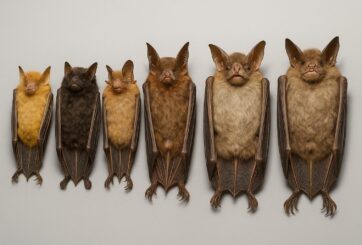
Just in time for Halloween, researchers from the Royal Ontario Museum (ROM), the Field Museum in Chicago, and Lawrence University in Wisconsin have announced the discovery of six new species of bats. These newly identified species, all found in the Philippines, belong to the group known as tube-nosed bats—a fascinating and diverse branch of the mammal family tree. Expanding the Tree of Life Formally recognized as new species through morphological and genetic analysis, this discovery expands the already impressive global…
In a recent study published today in the European Geosciences Union (EGU) journal Biogeosciences, scientists have confirmed that mercury pollution from artisanal and small-scale gold mining (ASGM) is contaminating food crops not through the soil, as previously believed, but directly from the air. Driven by the surging price of gold, which has increased by more than tenfold since 2000, the rapid expansion of unregulated mining in these regions raises urgent questions about food security, human health, and environmental justice The…
A new study from Iceland’s Surtsey island shows that birds carried most of the plants that colonised the island, challenging long-held beliefs that seed or fruit shape determines how plants spread — offering fresh insight into life’s adaptation to c When the volcanic island of Surtsey rose from the North Atlantic Ocean in 1963, it offered scientists a once-in-a-lifetime opportunity to observe how life takes hold on a brand-new and barren land. For decades, ecologists believed that plants’ ability to…
 Feedback
