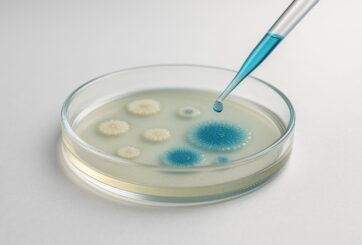
Smartbax nominated for Falling Walls award. It all began with basic research: While conducting laboratory experiments, a team at the Technical University of Munich (TUM) came across an active agent against multidrug-resistant bacteria with a fundamental difference to antibiotics developed to date. The researchers have since established a start-up to develop a new drug based on this agent. The entrepreneurs have now been nominated for Science Breakthrough of the Year in the Science Start-Up category at the international Falling Walls…

International team of researchers reveals for the first time a mechanism to explain pronounced climate variability during the last ice age. Although humankind is responsible for the current global climate warming, our planet has constantly been undergoing natural climate fluctuations throughout the past. Possible forcing mechanisms for this variability would have been changes in the brightness of the sun or explosive volcanic eruptions, but also interactions within the atmosphere/ocean/sea-ice system. Experts refer here to external and internal factors influencing the…
A surprising mechanism that makes some cancers treatment-resistant has been discovered by Weill Cornell Medicine and NewYork-Presbyterian investigators. The mechanism, which involves the shuttling of messenger RNAs (mRNAs) from the nucleus to the cytoplasm, ultimately facilitates DNA repair in cancer cells. These cancer cells can thereby thwart treatments aimed at damaging their DNA. In a project encompassing both fundamental research and clinical studies they demonstrated that a combination of approved chemotherapies, one of which targets the DNA repair-facilitating mechanism, could…
Future missions will be able to find signatures of violating the parity-symmetry in the cosmic microwave background polarization more accurately after a pair of researchers has managed to take into account the gravitational lensing effect, reports a new study in Physical Review D, selected as an Editors’ Suggestion. How far does the universe extend? When and how did the universe begin? Cosmology has made progress in addressing these questions by providing observational evidence for theoretical models of the universe based…
MYC proteins play an important role in many types of cancer. A research team at the University of Würzburg has now succeeded in indirectly influencing these proteins – with clear consequences for the tumor. MYC family genes are essential for the human organism. According to current knowledge, they regulate the expression of most cellular genes. Misregulation of MYC proteins significantly contributes to the development of many types of cancer. Unsurprisingly, MYC proteins are in the focus of cancer research worldwide….
Pancreatic cancer is not just one disease, but that’s the way it is currently treated. New work from Tannishtha Reya’s lab could help pave the way for a change. Though most pancreatic cancers are classified as pancreatic ductal adenocarcinoma (PDAC) several other subtypes exist. “Everyone gets the same chemotherapy, even though some subtypes are dramatically less responsive to the treatment and even more lethal,” says Tannishtha Reya, Ph.D., the Herbert and Florence Irving Professor of Basic Cancer Science (in Physiology & Cellular Biophysics) at Columbia…
Hodgkin’s lymphoma is one of the most common types of lymphoma in young adults. It is characterized by the presence of enlarged B lymphocytes, which are unusual in that they bear on their surface the identifying markers of many other immune cells – such as those found on phagocytes, dendritic cells, or T cells. Now, a team led by Stephan Mathas from the Experimental and Clinical Research Center (ECRC) has explained how these changes take place in the cells and…
Nature Electronics publishes research from University of Linz, Scuola Superiore Sant’Anna di Pisa and University of Trento. Technological advancement meets environmental sustainability. Actuators, which convert electrical energy into motion or force, play a pivotal role in daily life, albeit often going unnoticed. Soft material-based actuators, in particular, have gained scientific attention in recent years due to their lightweight, quiet operation, and biodegradability. A straightforward approach to creating soft actuators involves employing multi-material structures, such as “pockets” made of flexible plastic…
The MAF protein interacts with the estrogen receptor, alters its function, and promotes the spread of cancer. The KDM1A enzyme plays a fundamental role in the epigenetic remodelling that facilitates the function of pro-metastatic genes. The work carried out in Dr. Roger Gomis Lab at IRB Barcelona has been published in the journal Nature Cell Biology. Breast cancer is the most common form of cancer among women, with more than 2 million new cases diagnosed each year. In cases where the tumour remains…
For the first time, researchers have succeeded in printing a robotic hand with bones, ligaments and tendons made of different polymers using a new laser scanning technique. In brief: By making 3D printing suitable for slow-curing polymers, researchers have greatly expanded the possibilities of soft robotics. The new materials have advantages over the previous ones. The advances were possible thanks to a new technology that combines 3D printing with a laser scanner and a feedback mechanism. A spin-off in the…
The MHH research project iGUARD is also successful in the third round of the SPRIND Challenge and receives follow-up funding to develop antiviral RNA-based drugs. Despite successful vaccine development, there are still no effective drugs for most viral diseases. In order to achieve a breakthrough, the Federal Agency for Breakthrough Innovations launched the SPRIND Challenge two years ago. The iGUARD (integrated Guided Ultrafast Antiviral RNAi Drug Development) project has already been funded twice and, as a finalist in the third…
GEOMAR participates in international climate change conference COP28 and supports the “Dubai Ocean Declaration”. Partnering with other leading scientific and stakeholder organisations, GEOMAR Helmholtz Centre for Ocean Research Kiel participates in this year’s United Nations climate change conference in Dubai, United Arab Emirates. GEOMAR contributes to the Ocean Pavilion, a central hub for leveraging ocean science and solutions for the climate crisis coordinated by the Woods Hole Oceanographic Institution (WHOI) and Scripps Institution of Oceanography. Today, the partners call on…
ERC grant for Dresden quantum physicist Hassinger. Elena Hassinger, a renowned low-temperature physicist from the Würzburg-Dresden Cluster of Excellence ct.qmat, has been awarded €2.7 million in funding by the European Research Council. This ERC Consolidator Grant will support her pioneering work on unconventional superconductors, which could lead to a breakthrough in topological quantum computing. Over the next five years, Hassinger’s research in Dresden will delve into the enigmatic properties of cerium-rhodium-arsenic (CeRh2As2) and explore similar quantum materials under extreme laboratory…
…that may provide a link to mysterious sources. An international research team led by Michael Kramer and Kuo Liu from the Max Planck Institute for Radio Astronomy in Bonn, Germany, have studied a rare species of ultra-dense stars, so called magnetars, to uncover an underlying law that appears to apply universally to a range of objects known as neutron stars. This law gives insight into how these sources produce radio emission and it may provide a link to the mysterious…
Plants in which an ion channel of the vacuole is hyperactive are extremely stressed and grow poorly. But the broad bean is an exception, as Würzburg researchers have discovered. Like the human body, plants also use electrical signals to process and pass on information. In addition to the cell membrane, the membrane of the central vacuole plays an important role in this process. Vacuoles are typical for plant cells. They are fluid-filled bladders that act as a reservoir for minerals…
Scientists have simulated conditions that allow hazy skies to form in water-rich exoplanets, a crucial step in determining how haziness muddles observations by ground and space telescopes. The research offers new tools to study the atmospheric chemistry of exoplanets and will help scientists model how water exoplanets form and evolve, findings that could help in the search for life beyond our solar system. “The big picture is whether there is life outside the solar system, but trying to answer that…
Heidelberg scientists unveil genetic programmes controlling the development of cellular diversity in the cerebellum of humans and other mammals. The evolution of higher cognitive functions in human beings has so far mostly been linked to the expansion of the neocortex – a region of the brain that is responsible, inter alia, for conscious thought, movement and sensory perception. Researchers are increasingly realising, however, that the “little brain” or cerebellum also expanded during evolution and probably contributes to the capacities unique…
Farmland often harbors a multitude of pathogens which attack plants and reduce yields. A Swiss research team has now shown that inoculating the soil with mycorrhizal fungi can help maintain or even improve yields without the use of additional fertilizers or pesticides. In a large-scale field trial, plant yield increased by up to 40 percent. Intensive use of fertilizers and pesticides on fields reduces biodiversity and pollutes the environment. There is therefore great interest in finding sustainable ways to protect…
…enable Faster Migration Analysis of Immune Cells. Immune cells fight infectious intruders, for example, or search for incipient cancers. Therefor, they are constantly migrating through the tissues of our body. But in the wrong place, immune cells like neutrophil granulocytes can cause damage: If these white blood cells infiltrate tumours, this is often associated with a poor prognosis for patients. This is why they could benefit from drugs that prevent neutrophils from migrating into tumours. Until now, this migration has…
The pathway may help explain why patients develop vision loss from “wet” or advanced “dry” macular degeneration. In a study published December 4 in the Proceedings of the National Academy of Sciences, Wilmer Eye Institute researchers at Johns Hopkins Medicine have found how a molecular pathway — involving oxidative stress, or an imbalance of molecular oxygen in cells, and the protein HIF-1 — contributes to what kind of age-related macular degeneration (AMD) a patient could develop. The leading cause of…
 Feedback


