



Feeding 9 Billion: Innovations in Agricultural Modeling
The sensor uses a highly conductive gel sandwiched between layers of silicone that can detect different types of touch, including swiping and tapping, even when it is stretched, folded or bent. This feature makes it suited for foldable devices of the future.
“There are sensors that can detect pressure, such as the iPhone's 3D Touch, and some that can detect a hovering finger, like Samsung's AirView. There are also sensors that are foldable, transparent and stretchable. Our contribution is a device that combines all those functions in one compact package,” said researcher Mirza Saquib Sarwar, a PhD student in electrical and computer engineering at UBC.
The prototype, described in a recent paper in Science Advances, measures 5 cm x 5 cm but could be easily scaled up as it uses inexpensive, widely available materials, including the gel and silicone.
“It's entirely possible to make a room-sized version of this sensor for just dollars per square metre, and then put sensors on the wall, on the floor, or over the surface of the body–almost anything that requires a transparent, stretchable touch screen,” said Sarwar. “And because it's cheap to manufacture, it could be embedded cost-effectively in disposable wearables like health monitors.”
The sensor could also be integrated in robotic “skins” to make human-robot interactions safer, added John Madden, Sarwar's supervisor and a professor in UBC's faculty of applied science.
“Currently, machines are kept separate from humans in the workplace because of the possibility that they could injure humans. If a robot could detect our presence and be 'soft' enough that they don't damage us during an interaction, we can safely exchange tools with them, they can pick up objects without damaging them, and they can safely probe their environment,” said Madden.
###
The research was funded by the Natural Sciences and Engineering Research Council of Canada.
Flickr album: https:/
Video: https:/



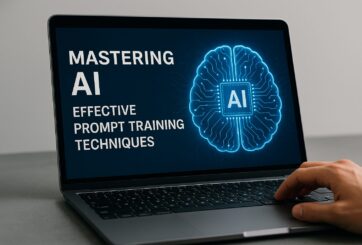
Research from Carnegie Mellon’s School of Computer Science suggests prompt engineering could be as important as coding Today’s generative artificial intelligence models can create everything from images to computer applications, but the quality of their output depends largely on the prompt a human user provides. Carnegie Mellon University researchers have proposed a new approach for teaching everyday users how to create these prompts and improving their interactions with generative artificial intelligence models. The method, called Requirement-Oriented Prompt Engineering (ROPE), shifts…

A new quantum random number generator is almost 1000 times faster than other generators and much smaller, promising to change data management and cybersecurity in several industries including health, finance, and defense A joint team of researchers led by scientists at King Abdullah University of Science and Technology (KAUST) and King Abdulaziz City for Science and Technology (KACST) has reported the fastest quantum random number generator (QRNG) to date based on international benchmarks. The QRNG, which passed the required randomness…

Very secure and highly efficient: encryption and decryption with luminescent perovskites To guarantee high data security, encryption must be unbreakable while the data remains rapidly and easily readable. A novel strategy for optical encryption/decryption of information has now been introduced in the journal Angewandte Chemie by a Chinese research team. It is based on compounds with carefully modulated luminescent properties that change in response to external stimuli. The compounds are hybrid two-dimensional organic-inorganic metal-halide perovskites, whose structure consists of inorganic…

Researchers at the University of Utah’s Department of Psychiatry and Huntsman Mental Health Institute today published a paper introducing RiskPath, an open source software toolkit that uses Explainable Artificial Intelligence (XAI) to predict whether individuals will develop progressive and chronic diseases years before symptoms appear, potentially transforming how preventive healthcare is delivered. XAI is an artificial intelligence system that can explain complex decisions in ways humans can understand. The new technology represents a significant advancement in disease prediction and prevention…
 Feedback
