New centre launched to investigate link between human sugars and disease

A multidisciplinary centre launched today will promote a far broader understanding of the role sugars play in human disease, scientists say.
Focused on glycobiology, the study of how sugars in human cells affect our biology, researchers hope it will accelerate the development of therapies for diseases such as HIV, cancers and muscular dystrophy.
The Glycobiology Training, Research and Infrastructure Centre (GlycoTRIC), established at Imperial College London, will promote research at the interface between biochemistry and medicine with the aim of pushing forward both knowledge in this area and its application. This in turn will foster an ideal environment for training the next generation of researchers, according to the head of the Centre, Professor Anne Dell, who explains:
“Glycobiology is an extremely broad subject, since the way sugars work can only be fully understood within the context of the whole body. This is the first centre in the UK to bring together experts in areas such as biochemistry, genetics and physiology and promises to revolutionise our understanding of human disease.”
The study of glycobiology is based on understanding the specific biological functions of the complex mixtures of sugars found in cells. The key focus of GlycoTRIC will be to increase our understanding of what these functions are and how they are performed, leading ultimately to concrete applications in medicine and biotechnology.
Inhibition of the sugar-mediated interaction between HIV and certain cell receptors, for example, has the potential to disrupt the infection in its earliest stages. Advances in glycobiology could also greatly improve cancer treatments by enabling medics to identify changes in levels of sugars that distinguish normal and tumour cells, offering opportunities for specifically targeted drugs.
Professor Dell says: “The knowledge we develop at the Centre will be a hugely important foundation for emerging therapies for a range of chronic conditions. As we gain a greater understanding of how the body works at a cellular level, we can create ways to focus therapies that overcome diseases at their earliest stages.”
The Centre is formally launched on 28 April with a lecture delivered by Professor Mike Ferguson of the University of Dundee entitled ‘Parasite glycobiology: understanding the enemy’.
Media Contact
More Information:
http://www.imperial.ac.ukAll latest news from the category: Health and Medicine
This subject area encompasses research and studies in the field of human medicine.
Among the wide-ranging list of topics covered here are anesthesiology, anatomy, surgery, human genetics, hygiene and environmental medicine, internal medicine, neurology, pharmacology, physiology, urology and dental medicine.


Newest articles
Superradiant atoms could push the boundaries of how precisely time can be measured
Superradiant atoms can help us measure time more precisely than ever. In a new study, researchers from the University of Copenhagen present a new method for measuring the time interval,…
Ion thermoelectric conversion devices for near room temperature
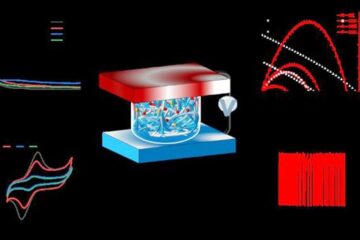
The electrode sheet of the thermoelectric device consists of ionic hydrogel, which is sandwiched between the electrodes to form, and the Prussian blue on the electrode undergoes a redox reaction…
Zap Energy achieves 37-million-degree temperatures in a compact device
New publication reports record electron temperatures for a small-scale, sheared-flow-stabilized Z-pinch fusion device. In the nine decades since humans first produced fusion reactions, only a few fusion technologies have demonstrated…