



Feeding 9 Billion: Innovations in Agricultural Modeling
A team of ten CSIRO researchers has helped Canadian oil company InterOil find exciting new oil shows in Papua New Guinea.
This early success follows from a vigorous exploration program, conducted in an ongoing research partnership with CSIRO’s Petroleum Division. The CSIRO studies have been critical to this result, consolidating evidence for a new petroleum system in InterOil’s exploration Licenses.
In late July InterOil announced finding fourteen oil shows through 135 meters (443 feet) of cored Tertiary limestones in the Moose-1 ST1 well, located 350km northwest of Port Moresby, in the Gulf Province of Papua New Guinea. The company plans to undertake additional testing, production and development drilling to determine the structure’s resource potential. Commercial confirmation would result in the first significant hydrocarbon discovery in the area in 44 years.
Recognising the geological and geochemical complexity of the PNG province, the company sought to capitalise on CSIRO’s specialist technologies and expertise in the Papuan Basin. InterOil’s General Manager of Exploration and Production, Andy Carroll says: “CSIRO has provided us with key technical expertise across several functions.”
For example, the application of high resolution strontium isotopic age dating to limestones and other marine fossils allows CSIRO and InterOil geoscientists to build an accurate ’stratigraphic yardstick’. This will permit accurate prediction of subsurface structure ’ahead of the bit’ during the forthcoming multi-well drilling program.
The accurate limestone ages are also used to construct basin models that assist with the prediction of subsurface reservoir distribution through InterOil’s exploration area. In addition, CSIRO is independently evaluating reservoir data like porosity and permeability, and geochemically typing hydrocarbons. InterOil is using these data in estimating potential predrill reservoir sizes and hydrocarbon volumetrics.
CSIRO researchers have been studying InterOil’s prospects, covering the area northwest from Port Moresby into the Papuan foothills and highlands north of the Gulf of Papua, examining reservoir quality and sedimentology, organic geochemistry and petrology, geochronology and regional basin history. The work has included detailed laboratory analysis and field studies.
CSIRO Project Coordinator, Tony Allan says the project is of great scientific interest.
“This work builds on 10 years of CSIRO research in Papua New Guinea,” he says. “It is providing unique insights into petroleum system evolution throughout the Papuan Basin, with a direct impact on models driving current exploration in this region.
“Our InterOil work is also relevant to petroleum systems analysis across the northwest Australian margin, and to the continuing development of CSIRO exploration and appraisal technologies.”
The new chief of the Division, Professor Beverley Ronalds, is encouraging the future development of the CSIRO-InterOil science alliance. “CSIRO’s role in exploration-related research is not only about developing new technologies but ensuring they are applied and are making a difference in the industry. I am delighted that our research partnership with InterOil is delivering on both” Professor Ronalds




Populations in the Southern Caucasus have maintained remarkably consistent genetic ancestry for over 5,000 years, even through periods of significant cultural transformation. Recent research conducted by an international team from Germany, Georgia, Armenia, and Norway indicates that, although there were some genetic inputs from the Eurasian Steppe and Anatolia throughout the Bronze Age, the fundamental local gene pool remained stable across millennia. A Landmark Archaeogenetic Study Researchers at the Max Planck-Harvard Research Centre for the Archaeoscience of the Ancient Mediterranean…
The linguistic abilities of contemporary artificial intelligence systems are remarkable. We can now participate in genuine dialogues with systems such as ChatGPT, Gemini, and others, exhibiting a fluency nearly akin to that of a human. Nevertheless, our understanding of the fundamental mechanisms within these networks that yield such extraordinary outcomes remains limited. A recent study published in the Journal of Statistical Mechanics: Theory and Experiment (JSTAT) elucidates a component of this enigma. It indicates that when less data is utilised…
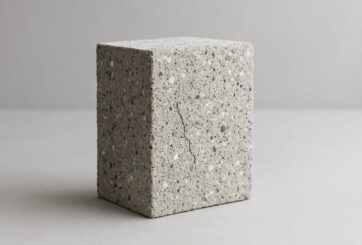
The idea seems futuristic: At ETH Zurich, various disciplines are working together to combine conventional materials with bacteria, algae and fungi. The common goal: to create living materials that acquire useful properties thanks to the metabolism of microorganisms – “such as the ability to bind CO2 from the air by means of photosynthesis,” says Mark Tibbitt, Professor of Macromolecular Engineering at ETH Zurich. An interdisciplinary research team led by Tibbitt has now turned this vision into reality: it has stably…
About 100 cells divide every second in our body. A key protein in cell division is a protein kinase termed Plk1, because it activates other proteins involved in this process. Plk1 is also overexpressed in many types of cancer. This makes it a promising target for cancer therapies. However, drugs that inhibit Plk1 have often proven ineffective. New findings by researchers led by Peter Lenart and Monica Gobran may help to improve therapeutic approaches. They discovered a previously unknown function…
 Feedback
