



Feeding 9 Billion: Innovations in Agricultural Modeling
National Insitute of Standards and Technology (NIST) scientists are taking their knowledge of mechanical tensile strength tests in metals and composites and applying it to medical research problems. Doctors long have known that babies born with congenital heart defects at higher altitudes have an increased risk of developing complications, such as pulmonary hypertension. Could there be some way to trick the arterial walls so that they wouldn’t stiffen under increased blood pressure?
Working with the Children’s Hospital and University of Colorado Health Sciences Center in Denver, NIST researchers have used rat arteries–both normal and hypertensive–supplied by the university center and placed them in a mechanical stress tester. The tester holds a small disc-shaped sample of the arterial tissue that is slowly stretched by pumping a special liquid against the back of the disc. The pressure of the liquid causes a bubble to form on the front of the disc. The shape of the resulting bubble helps the researchers determine details about the tissues’ elasticity, strength, stiffness and other properties.
” Hypertensive tissue should be stiffer, so we will get less inflation with the same amount of pressure,” says NIST researcher Elizabeth Drexler. “What we want to know is what it is in the artery that causes it to stiffen. Is it more collagen? Is it the smooth muscle cells? Perhaps we could give the muscle cell a signal not to produce more collagen.” So far they have studied 20 rat arteries and plan to study 20 more, along with some calf arteries. A preliminary report that verifies their test method appears in the May/June issue of the NIST Journal of Research.




Populations in the Southern Caucasus have maintained remarkably consistent genetic ancestry for over 5,000 years, even through periods of significant cultural transformation. Recent research conducted by an international team from Germany, Georgia, Armenia, and Norway indicates that, although there were some genetic inputs from the Eurasian Steppe and Anatolia throughout the Bronze Age, the fundamental local gene pool remained stable across millennia. A Landmark Archaeogenetic Study Researchers at the Max Planck-Harvard Research Centre for the Archaeoscience of the Ancient Mediterranean…
The linguistic abilities of contemporary artificial intelligence systems are remarkable. We can now participate in genuine dialogues with systems such as ChatGPT, Gemini, and others, exhibiting a fluency nearly akin to that of a human. Nevertheless, our understanding of the fundamental mechanisms within these networks that yield such extraordinary outcomes remains limited. A recent study published in the Journal of Statistical Mechanics: Theory and Experiment (JSTAT) elucidates a component of this enigma. It indicates that when less data is utilised…
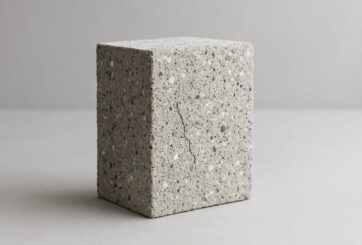
The idea seems futuristic: At ETH Zurich, various disciplines are working together to combine conventional materials with bacteria, algae and fungi. The common goal: to create living materials that acquire useful properties thanks to the metabolism of microorganisms – “such as the ability to bind CO2 from the air by means of photosynthesis,” says Mark Tibbitt, Professor of Macromolecular Engineering at ETH Zurich. An interdisciplinary research team led by Tibbitt has now turned this vision into reality: it has stably…
About 100 cells divide every second in our body. A key protein in cell division is a protein kinase termed Plk1, because it activates other proteins involved in this process. Plk1 is also overexpressed in many types of cancer. This makes it a promising target for cancer therapies. However, drugs that inhibit Plk1 have often proven ineffective. New findings by researchers led by Peter Lenart and Monica Gobran may help to improve therapeutic approaches. They discovered a previously unknown function…
 Feedback
