



Feeding 9 Billion: Innovations in Agricultural Modeling
Who has not wound up nowhere in an Internet search for information that should be available about a company, an institution, or an organization? Who has not then longed to have someone to talk to who could answer questions with no hassle or waste of time? Johan Åberg, from the Department of Computer Science at Linköping University, Sweden, has studied what such a human help system might look like.
Automatic help systems with computerized answers already exist. But they seldom work very well unless the field they cover is extremely narrow or unless the number of possible questions is limited. In all other cases, automated help systems often leave the user feeling frustrated rather than satisfied.
In his dissertation, Johan Åberg has tested a human help system at the Website Elfwood (http://elfwood.lysator.liu.se), an international site for fantasy art and literature. For three weeks there were 35 volunteer assistants available there to answer questions in real time.
“The evaluation was highly favorable: users were extremely satisfied,” says Johan Åberg. “Since they had checked a box for a certain subject area before they posed their question, they were automatically referred to a person who had the most knowledge about their subject and could provide the best answer.”
Johan Åberg’s help system was complemented by a computer base where questions and answers were stored, so recurring questions could be answered automatically. The system was also provided with knowledge profiles that were gradually developed for recurrent questions. For example, if someone wanted to know how a certain motif should be painted in water colors, it was useful for the person answering to know whether the questioner was a beginner or not. Those asking questions were informed in advance that these knowledge profiles were being set up.
Human help systems are expensive, of course, and they are therefore most suitable for operations where it is truly vital that users get a good answer. Banks, insurance companies, and e-commerce firms in capital goods could serve as examples. Human help systems can help companies like these to enhance their trustworthiness and thereby increase their sales.
So far, Johan Åberg is largely the only researcher in his field. His results have been reported at the leading international conference on human-computer interaction, and they attracted a great deal of attention.



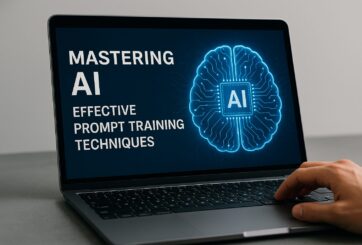
Research from Carnegie Mellon’s School of Computer Science suggests prompt engineering could be as important as coding Today’s generative artificial intelligence models can create everything from images to computer applications, but the quality of their output depends largely on the prompt a human user provides. Carnegie Mellon University researchers have proposed a new approach for teaching everyday users how to create these prompts and improving their interactions with generative artificial intelligence models. The method, called Requirement-Oriented Prompt Engineering (ROPE), shifts…

A new quantum random number generator is almost 1000 times faster than other generators and much smaller, promising to change data management and cybersecurity in several industries including health, finance, and defense A joint team of researchers led by scientists at King Abdullah University of Science and Technology (KAUST) and King Abdulaziz City for Science and Technology (KACST) has reported the fastest quantum random number generator (QRNG) to date based on international benchmarks. The QRNG, which passed the required randomness…

Very secure and highly efficient: encryption and decryption with luminescent perovskites To guarantee high data security, encryption must be unbreakable while the data remains rapidly and easily readable. A novel strategy for optical encryption/decryption of information has now been introduced in the journal Angewandte Chemie by a Chinese research team. It is based on compounds with carefully modulated luminescent properties that change in response to external stimuli. The compounds are hybrid two-dimensional organic-inorganic metal-halide perovskites, whose structure consists of inorganic…

Researchers at the University of Utah’s Department of Psychiatry and Huntsman Mental Health Institute today published a paper introducing RiskPath, an open source software toolkit that uses Explainable Artificial Intelligence (XAI) to predict whether individuals will develop progressive and chronic diseases years before symptoms appear, potentially transforming how preventive healthcare is delivered. XAI is an artificial intelligence system that can explain complex decisions in ways humans can understand. The new technology represents a significant advancement in disease prediction and prevention…
 Feedback
