



Feeding 9 Billion: Innovations in Agricultural Modeling
Researchers at the Belfast-based university are currently undertaking a new technology study which has the potential to add the sense of touch to virtual worlds.
In addition to opening up a whole array of new opportunities for industries such as electronic gaming, the new technology also promises to permit blind and visually impaired people to access the internet in a way they cannot currently.
At present, major online networks can only carry information relating to two senses, aural and visual. Now, Professor Alan Marshall and his colleagues in the School of Electronics, Electrical Engineering and Computer Science at Queen’s are to spend the next three years working on new network architectures to support the addition of other senses, particularly that of ‘touch’.
Known as haptic technology, such systems interface the user via the sense of touch by applying forces, vibrations and/or motions to the user. This mechanical stimulation is used to create haptic virtual objects in a haptic virtual environment.
At present, almost all haptic devices are only capable of being connected to a single stand-alone system. Professor Marshall and his partners, including BT (UK), Immersion (USA) and HandshakeVR (Canada), hope to develop networks to increase the user’s immersion in a virtual environment by allowing them not only to see but also to touch the environment around them. It is hoped users will also be able to share these sensations with fellow users in numerous locations. The study will also aim to overcome the challenge of maintaining a consistent view of the shared information in the face of inevitable network delays and variable bandwidth.
Queen’s University already has a world first in the area of haptic technology, having performed the first long distance tele-haptic coloration over the internet in conjunction with British Telecom’s research lab in Ipswich in 2003.
Speaking about his hopes for the new study, Professor Marshall, who is principal investigator of the project, said: “If we are to enter the ‘second age’ of the internet, then it must be able to support multimodal communication, including additional senses. Queen’s University is a forerunner in the global race to introduce the necessary new architectures and networks capable of carrying such information.
“We are already leading a new project entitled ENABLED concerning the delivery of web content to blind and visually impaired and the potential applications made possible by the architectures coming out of this new study will be huge.
“Take the Nintendo Wii as an example. It has already revolutionised gaming without players having the ability to receive any touch-related feedback. Imagine what it would be like if we could select to play a virtual character based on Roger Federer and feel every impact of his serve, in real time.”



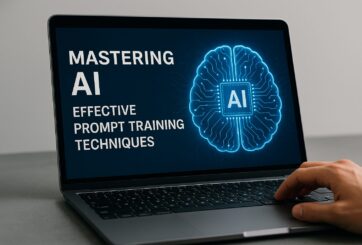
Research from Carnegie Mellon’s School of Computer Science suggests prompt engineering could be as important as coding Today’s generative artificial intelligence models can create everything from images to computer applications, but the quality of their output depends largely on the prompt a human user provides. Carnegie Mellon University researchers have proposed a new approach for teaching everyday users how to create these prompts and improving their interactions with generative artificial intelligence models. The method, called Requirement-Oriented Prompt Engineering (ROPE), shifts…

A new quantum random number generator is almost 1000 times faster than other generators and much smaller, promising to change data management and cybersecurity in several industries including health, finance, and defense A joint team of researchers led by scientists at King Abdullah University of Science and Technology (KAUST) and King Abdulaziz City for Science and Technology (KACST) has reported the fastest quantum random number generator (QRNG) to date based on international benchmarks. The QRNG, which passed the required randomness…

Very secure and highly efficient: encryption and decryption with luminescent perovskites To guarantee high data security, encryption must be unbreakable while the data remains rapidly and easily readable. A novel strategy for optical encryption/decryption of information has now been introduced in the journal Angewandte Chemie by a Chinese research team. It is based on compounds with carefully modulated luminescent properties that change in response to external stimuli. The compounds are hybrid two-dimensional organic-inorganic metal-halide perovskites, whose structure consists of inorganic…

Researchers at the University of Utah’s Department of Psychiatry and Huntsman Mental Health Institute today published a paper introducing RiskPath, an open source software toolkit that uses Explainable Artificial Intelligence (XAI) to predict whether individuals will develop progressive and chronic diseases years before symptoms appear, potentially transforming how preventive healthcare is delivered. XAI is an artificial intelligence system that can explain complex decisions in ways humans can understand. The new technology represents a significant advancement in disease prediction and prevention…
 Feedback
