



Feeding 9 Billion: Innovations in Agricultural Modeling
Perhaps people do not realize it, but haptic technology is already in our lives. Vibrating phones, gaming controllers and force-feedback control knobs in cars, like BMW’s iDrive, are examples of this technology. These days, you can turn your phone ring tone off, put it in your purse and still feel that someone is calling you when you get a vibration. On the other hand, the Nintendo Wii video game console has been a new revolution for game lovers. The controller, called Wii, provides vibrations (i.e. when you hit the ball in a tennis game) which enhances the virtual sensation.
However, these examples are only the beginning of a cutting-edge technology. In terms of user-computer interaction, touch offers a new way of interacting or manipulating our screen. We used to just have vision and sound, now we also have touch. Thanks to haptic devices, such as, the most well-known PHANToM haptic devices (Figure 1.a and a.b) or hand exoskeleton devices (Figure 1.c), “you can feel or touch what you see”, recognize object shapes, textures, stiffness or grasp them and feeling their weight. Such devices are being used now for virtual modeling, medicine, education, assistive technology for blind people, as well as industrial design and maintenance. Our work addresses the industrial field.
Currently, physical prototypes are replaced by virtual or digital prototypes/models (Computer Aided Design – CAD) to avoid building expensive prototypes, especially in the automotive and aeronautics sectors (Figure 2.a). Increasingly, these CAD systems also allow designers and engineers to carry out assembly processes. The use of touch in CAD systems allows operators to feel forces and local stimuli similar to those in real situations, which provides more intuitive manipulation (i.e. check any defect or decide the most appropriate assembly sequence). On the other hand, different designers, which may be situated over a thousand kilometers away, often collaborate in the design and revision of products to lessen time and lower costs. The objective of this thesis is to research and provide solutions for collaborative haptic assembly systems, where several designers in different locations can grasp virtual parts and assemble them into a digital engine or other mechanical parts (Figure 2.b). To achieve it, a Collaborative Haptic Assembly Simulator, called CHAS, was developed, where two designers can collaborate together in real-time. Trials between Labein (Derio, Bizkaia) and Queen’s University Belfast (Northern Ireland) have verified this system. When performing the assembly task, the operator in Bizkaia could assemble a part into another part grasped by the remote operator in Belfast. Furthermore, the operator in Belfast could feel the collisions with the part grasped by the remote operator.
This is a small step towards new systems of collaboration over the Internet, or a new way of interacting over distance. Doctors will have the ability to remotely diagnose and operate on patients, or we will be able to shake hands virtually.



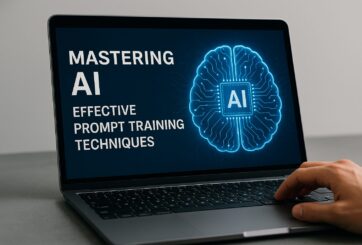
Research from Carnegie Mellon’s School of Computer Science suggests prompt engineering could be as important as coding Today’s generative artificial intelligence models can create everything from images to computer applications, but the quality of their output depends largely on the prompt a human user provides. Carnegie Mellon University researchers have proposed a new approach for teaching everyday users how to create these prompts and improving their interactions with generative artificial intelligence models. The method, called Requirement-Oriented Prompt Engineering (ROPE), shifts…

A new quantum random number generator is almost 1000 times faster than other generators and much smaller, promising to change data management and cybersecurity in several industries including health, finance, and defense A joint team of researchers led by scientists at King Abdullah University of Science and Technology (KAUST) and King Abdulaziz City for Science and Technology (KACST) has reported the fastest quantum random number generator (QRNG) to date based on international benchmarks. The QRNG, which passed the required randomness…

Very secure and highly efficient: encryption and decryption with luminescent perovskites To guarantee high data security, encryption must be unbreakable while the data remains rapidly and easily readable. A novel strategy for optical encryption/decryption of information has now been introduced in the journal Angewandte Chemie by a Chinese research team. It is based on compounds with carefully modulated luminescent properties that change in response to external stimuli. The compounds are hybrid two-dimensional organic-inorganic metal-halide perovskites, whose structure consists of inorganic…

Researchers at the University of Utah’s Department of Psychiatry and Huntsman Mental Health Institute today published a paper introducing RiskPath, an open source software toolkit that uses Explainable Artificial Intelligence (XAI) to predict whether individuals will develop progressive and chronic diseases years before symptoms appear, potentially transforming how preventive healthcare is delivered. XAI is an artificial intelligence system that can explain complex decisions in ways humans can understand. The new technology represents a significant advancement in disease prediction and prevention…
 Feedback
