



Feeding 9 Billion: Innovations in Agricultural Modeling
Rune Moeller Jensen is researching automatic planning at The IT University of Copenhagen. “Planning is based on selecting and organizing activities in relation to their expected outcome to achieve specific goals. We all know planning problems from everyday life. If we, for example, are building a house, there are many activities which need to be coordinated. Such as the house's foundation needs to be completed before the walls can be built”, explains Rune Moeller Jensen, adding that the same applies within IT.
“Planning technology has progressed a very long way and the number of industrial applications is increasing rapidly”, says Rune Moeller Jensen. Automatic planning is used for example in air traffic control and in the planning of military rescue operations.
Automatic planning is part of an area within computer science called artificial intelligence. The goal is to develop algorithms which use descriptions of planning problems, such as a rescue operation, to return a plan of how such complex situations can be solved. Automatic planning is very challenging. “If, for example, there are 25 different things you could bring with you in a rescue helicopter such as oxygen masks, resuscitation equipment and life jackets, then there are in general 225 or more than 33 million ways to load the helicopter”, explains Rune Moeller Jensen.
New Efficient Combination Creates New Opportunities
Rune Moeller Jensen’s research can be seen as providing a way to combine route planning principles with principles for automatic fault finding. “My research has combined two different but complementary principles for handling complex planning problems, developed within the computer science disciplines of artificial intelligence and formal verification”, explains Rune Moeller Jensen.
Several research groups have tried to combine the two principles. However, this has been shown to be difficult. Rune Moeller Jensen has, in co-operation with American colleagues from Carnegie Mellon University, developed a method called state-set-branching, in which the two principles can be combined. “We could show that these search algorithms were more efficient than previous algorithms”, he says. He explains that the new technology has been used to plan search and rescue operations for the American air force.



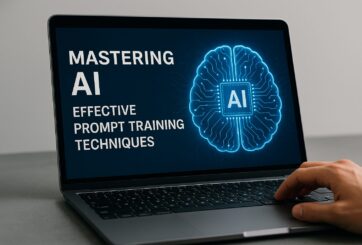
Research from Carnegie Mellon’s School of Computer Science suggests prompt engineering could be as important as coding Today’s generative artificial intelligence models can create everything from images to computer applications, but the quality of their output depends largely on the prompt a human user provides. Carnegie Mellon University researchers have proposed a new approach for teaching everyday users how to create these prompts and improving their interactions with generative artificial intelligence models. The method, called Requirement-Oriented Prompt Engineering (ROPE), shifts…

A new quantum random number generator is almost 1000 times faster than other generators and much smaller, promising to change data management and cybersecurity in several industries including health, finance, and defense A joint team of researchers led by scientists at King Abdullah University of Science and Technology (KAUST) and King Abdulaziz City for Science and Technology (KACST) has reported the fastest quantum random number generator (QRNG) to date based on international benchmarks. The QRNG, which passed the required randomness…

Very secure and highly efficient: encryption and decryption with luminescent perovskites To guarantee high data security, encryption must be unbreakable while the data remains rapidly and easily readable. A novel strategy for optical encryption/decryption of information has now been introduced in the journal Angewandte Chemie by a Chinese research team. It is based on compounds with carefully modulated luminescent properties that change in response to external stimuli. The compounds are hybrid two-dimensional organic-inorganic metal-halide perovskites, whose structure consists of inorganic…

Researchers at the University of Utah’s Department of Psychiatry and Huntsman Mental Health Institute today published a paper introducing RiskPath, an open source software toolkit that uses Explainable Artificial Intelligence (XAI) to predict whether individuals will develop progressive and chronic diseases years before symptoms appear, potentially transforming how preventive healthcare is delivered. XAI is an artificial intelligence system that can explain complex decisions in ways humans can understand. The new technology represents a significant advancement in disease prediction and prevention…
 Feedback
