



Feeding 9 Billion: Innovations in Agricultural Modeling
The game – called C-Shock – is the brainchild of University of Portsmouth academic and games technology expert Nipan Maniar who, himself, arrived in the UK from India five years ago as an international student.
Nipan said the game would act as an 'e-mother' or 'mobile mummy' for new students.
“I found some aspects of British culture very novel, and certainly things such as interacting socially with others, say, in a pub were very different to what I was used to in my own culture in India,” Nipan said.
“I thought it would be great to have a learning vehicle or device to help people overcome the culture shock because if you have not experienced such things before, it's hard to know how to react or behave appropriately.”
Nipan and his research assistant, Dr Emily Bennett, developed the prototype of the mobile phone game after consulting with the University's International Office and the British Council.
The game follows an international student arriving in the UK for the first time. The aim of the game is to reduce the character's 'culture shock' rating from a default of 100 to zero by performing a series of tasks that introduce culture shock-inducing incidents and images.
The game's opening scenario is a student's first day at university in the UK. The student is shown a map of the campus and is given tasks to find specific locations. Clicking on images along the way warns the student about what to expect in terms of culture shock – for example, it is acceptable for students to drink alcohol and it is okay for people to display affection in public.
The game also includes important information such as police and emergency telephone numbers.
Nipan expects the idea of using mobile phone games technologies to communicate with students to be adopted by other universities in the UK.
“C-Shock could be used to guide students through events such as registration as well as help them with basic information like getting to a bank or ATM that's closest to them. You could incorporate a whole city guide into the game so, in effect, the new student has this interactive learning tool to quickly settle into a new city very quickly,” Nipan said.
“Using mobile phone games to communicate with people and educate in this way is a new concept, and the potential is limited only by one's imagination. I expect many other universities will follow suit. The ability to generate revenue from in-game advertising is also a significant factor in why this type of application would be attractive to organisations in the private sector as well.”
The game is in the final stages of development and is expected to be available for download from the University of Portsmouth website later this year.



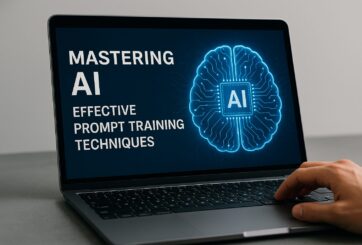
Research from Carnegie Mellon’s School of Computer Science suggests prompt engineering could be as important as coding Today’s generative artificial intelligence models can create everything from images to computer applications, but the quality of their output depends largely on the prompt a human user provides. Carnegie Mellon University researchers have proposed a new approach for teaching everyday users how to create these prompts and improving their interactions with generative artificial intelligence models. The method, called Requirement-Oriented Prompt Engineering (ROPE), shifts…

A new quantum random number generator is almost 1000 times faster than other generators and much smaller, promising to change data management and cybersecurity in several industries including health, finance, and defense A joint team of researchers led by scientists at King Abdullah University of Science and Technology (KAUST) and King Abdulaziz City for Science and Technology (KACST) has reported the fastest quantum random number generator (QRNG) to date based on international benchmarks. The QRNG, which passed the required randomness…

Very secure and highly efficient: encryption and decryption with luminescent perovskites To guarantee high data security, encryption must be unbreakable while the data remains rapidly and easily readable. A novel strategy for optical encryption/decryption of information has now been introduced in the journal Angewandte Chemie by a Chinese research team. It is based on compounds with carefully modulated luminescent properties that change in response to external stimuli. The compounds are hybrid two-dimensional organic-inorganic metal-halide perovskites, whose structure consists of inorganic…

Researchers at the University of Utah’s Department of Psychiatry and Huntsman Mental Health Institute today published a paper introducing RiskPath, an open source software toolkit that uses Explainable Artificial Intelligence (XAI) to predict whether individuals will develop progressive and chronic diseases years before symptoms appear, potentially transforming how preventive healthcare is delivered. XAI is an artificial intelligence system that can explain complex decisions in ways humans can understand. The new technology represents a significant advancement in disease prediction and prevention…
 Feedback
