



Feeding 9 Billion: Innovations in Agricultural Modeling
But, despite their increased use, little attention has been paid to the human-system interaction that these technologies require. With fingerprint scanners and other imaging devices, for example, user behavior can affect both the quality of the image and the time required to capture it.
At present there are no guidelines for using biometric hardware and software that could lead to improved usability and interaction techniques.
As part of its role under the USA PATRIOT Act, researchers at the National Institute of Standards and Technology (NIST) conducted a study examining the effect of the work surface height of a fingerprint sensor on the quality and the time required to collect prints. NIST researchers collected five types of fingerprint images from 75 NIST employees, ranging in age from 17 to 67.
Images were collected from a “left slap”; (all fingers on the left hand except for the thumb); a “right slap”; a left or right thumb; and both thumbs. Work surface heights varied from 26 inches (660 millimeters) to 42 inches (1,067 millimeters). The fingerprint scanner used in the study had a height of 6 inches (152 millimeters)–the expected height of the next generation of fingerprint scanners to be used in many federal government applications.
The researchers found that participants performed fastest using a work surface height of 36 inches (914 millimeters); and a height of 26 inches (660 millimeters) produced the highest image quality. Participants preferred a work surface height of 32 or 36 inch (813 or 914 millimeters); the 42 inch height was most uncomfortable. Seventy-six percent of the participants preferred starting with their right hands, which also made the process faster. Quality dropped dramatically when thumbprints were taken simultaneously rather than one at a time.



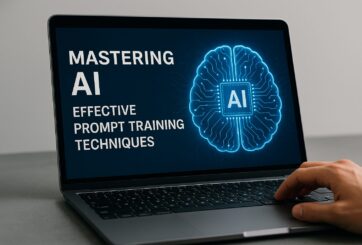
Research from Carnegie Mellon’s School of Computer Science suggests prompt engineering could be as important as coding Today’s generative artificial intelligence models can create everything from images to computer applications, but the quality of their output depends largely on the prompt a human user provides. Carnegie Mellon University researchers have proposed a new approach for teaching everyday users how to create these prompts and improving their interactions with generative artificial intelligence models. The method, called Requirement-Oriented Prompt Engineering (ROPE), shifts…

A new quantum random number generator is almost 1000 times faster than other generators and much smaller, promising to change data management and cybersecurity in several industries including health, finance, and defense A joint team of researchers led by scientists at King Abdullah University of Science and Technology (KAUST) and King Abdulaziz City for Science and Technology (KACST) has reported the fastest quantum random number generator (QRNG) to date based on international benchmarks. The QRNG, which passed the required randomness…

Very secure and highly efficient: encryption and decryption with luminescent perovskites To guarantee high data security, encryption must be unbreakable while the data remains rapidly and easily readable. A novel strategy for optical encryption/decryption of information has now been introduced in the journal Angewandte Chemie by a Chinese research team. It is based on compounds with carefully modulated luminescent properties that change in response to external stimuli. The compounds are hybrid two-dimensional organic-inorganic metal-halide perovskites, whose structure consists of inorganic…

Researchers at the University of Utah’s Department of Psychiatry and Huntsman Mental Health Institute today published a paper introducing RiskPath, an open source software toolkit that uses Explainable Artificial Intelligence (XAI) to predict whether individuals will develop progressive and chronic diseases years before symptoms appear, potentially transforming how preventive healthcare is delivered. XAI is an artificial intelligence system that can explain complex decisions in ways humans can understand. The new technology represents a significant advancement in disease prediction and prevention…
 Feedback
