



Feeding 9 Billion: Innovations in Agricultural Modeling
Sheffield Hallam University has just taken ownership of a state-of-the-art mother and baby simulator to give student midwives practical experience of birthing mothers and newborns before they enter a real clinical setting.
The simulator, called Noelle, is computer programmable and can go through hundreds of different births – some short (warp speed is a full delivery in five minutes) and without complications and some longer (up to six hours) and much more complex, including breach births, caesarean sections, premature births and ventouse deliveries.
During the delivery healthcare students can monitor the heart rates of both mother and baby and can also keep a check on the baby's vital signs.
When the baby is finally born it can be programmed to have a number of complications and the students must care for both mother and baby in an appropriate manner.
Noelle is manufactured by Gaumard. Our technicians have named the full term baby Holly and the pre-term baby Ivy.
Linda Lang, Acting Deputy Dean in the Faculty of Health and Wellbeing explains, “The birthing simulator provides a realistic experience for students and allows them to experience difficult births that they may otherwise never encounter during their training.
“At Sheffield Hallam we teach in state-of-the-art realistic clinical settings so Noelle can find herself in an operating theatre having a caesarean at one moment, in a ward in the early stages of labour the next or even in a simulated home birth. This allows us the flexibility to provide our students with a much wider range of experience than they would otherwise receive, and it gives them a real edge in preparation for working in real practice settings.
“Noelle and her newborn are the latest additions to our human simulator family and mean that all of our health care students can now benefit from this new technology.
“The simulators allow us to teach in an inter-professional way so that nurses, midwives, paramedics, physiotherapists and other health care professionals can work together in a realistic environment. This mimics the way they will work when they qualify and develops their communications skills and confidence.”



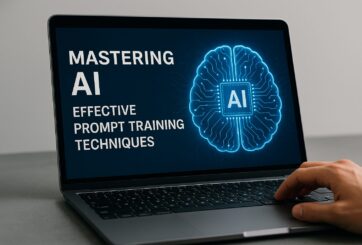
Research from Carnegie Mellon’s School of Computer Science suggests prompt engineering could be as important as coding Today’s generative artificial intelligence models can create everything from images to computer applications, but the quality of their output depends largely on the prompt a human user provides. Carnegie Mellon University researchers have proposed a new approach for teaching everyday users how to create these prompts and improving their interactions with generative artificial intelligence models. The method, called Requirement-Oriented Prompt Engineering (ROPE), shifts…

A new quantum random number generator is almost 1000 times faster than other generators and much smaller, promising to change data management and cybersecurity in several industries including health, finance, and defense A joint team of researchers led by scientists at King Abdullah University of Science and Technology (KAUST) and King Abdulaziz City for Science and Technology (KACST) has reported the fastest quantum random number generator (QRNG) to date based on international benchmarks. The QRNG, which passed the required randomness…

Very secure and highly efficient: encryption and decryption with luminescent perovskites To guarantee high data security, encryption must be unbreakable while the data remains rapidly and easily readable. A novel strategy for optical encryption/decryption of information has now been introduced in the journal Angewandte Chemie by a Chinese research team. It is based on compounds with carefully modulated luminescent properties that change in response to external stimuli. The compounds are hybrid two-dimensional organic-inorganic metal-halide perovskites, whose structure consists of inorganic…

Researchers at the University of Utah’s Department of Psychiatry and Huntsman Mental Health Institute today published a paper introducing RiskPath, an open source software toolkit that uses Explainable Artificial Intelligence (XAI) to predict whether individuals will develop progressive and chronic diseases years before symptoms appear, potentially transforming how preventive healthcare is delivered. XAI is an artificial intelligence system that can explain complex decisions in ways humans can understand. The new technology represents a significant advancement in disease prediction and prevention…
 Feedback
