



Feeding 9 Billion: Innovations in Agricultural Modeling
Plexousakis is scientific coordinator of Beyond-The-Horizon, a road-mapping initiative, led by the European Research Consortium for Informatics and Mathematics (ERCIM), which has been investigating new frontiers in ICT research, to identify the boundaries with other disciplines, the relationships between them and the opportunities for cross-fertilisation.
Such roadmap projects can influence national government and EU strategies as well as those of a variety of commercial, industrial, medical, social and cultural organisations, believes Plexousakis. The interdisciplinary research that they incorporate can stimulate the exploration of new directions and lead to significant breakthroughs.
“ICTs have always profited from cross-fertilisation with other scientific disciplines,” he says, pointing out that Beyond-The-Horizon addresses fields ranging from mathematics to biology, from materials science to psychology. “For example, the ongoing miniaturisation of components onto a single processor chip requires further advances in materials and chip design,” he says, as well as progress in alternative computing methods such as quantum computing.
Beyond-the-Horizon, an IST project funded under the EU’s Future and Emerging Technologies (FET) initiative, aimed in particular to identify ideas for research that may be high-risk in terms of the ratio between expenditure and reward, but at the same time could offer great potential for radical innovation and a long-term payoff. In this way, the project has gone much further than many ICT research roadmaps, which may just identify issues where ‘no known solutions’ are available.
The project sought to identify such issues through a series of workshops and broad consultation with the relevant research communities. It split its work into six themes, each of which represents the efforts of a specific group of researchers across Europe. The themes are:
– Pervasive computing and communications.
– Nanoelectronics and nanotechnology.
– Security, dependability and trust.
– Bio-inspired information and communication technologies.
– Intelligent and cognitive systems.
– Software-intensive systems.
“The idea was to address certain ICT research areas where no roadmaps have yet been drafted,” says Plexousakis. “We hope that in early 2007, the proposed new areas for research under the coming Seventh Framework Programme will be influenced by our results.”
Plexousakis emphasises that the most significant finding to come out of Beyond-The-Horizon is the importance of interdisciplinary research. “The need for interdisciplinary research if we are to make progress is far greater than we imagined at the beginning of the project. All the different groups of researchers have to contribute to a research area if any real breakthrough is to be achieved.”
He picks out as example the growing synergy between research in the biosciences and ICT. “Suppose you are working on nanoscale devices for implantation in the human body – devices that will communicate at the cell level. This is not a subject for engineers alone, nor for doctors or biologists, but for experts in the all the disciplines working together.”
Using this example, Plexousakis points to the current status of European research in such areas. “With built-in systems that interface between computers and biological systems using nanotechnology, we cannot at present match the lead held by semiconductor and nanotech industries in Asia and the US.”
“However,” he continues, “where we can demonstrate excellence is in the actual interface between biological and computer systems in nanoscale technology – where the EU is ahead in some areas. We need to maintain this lead.”



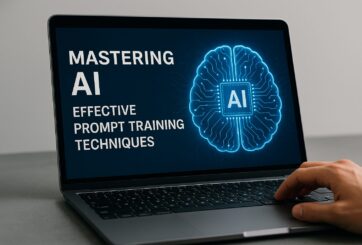
Research from Carnegie Mellon’s School of Computer Science suggests prompt engineering could be as important as coding Today’s generative artificial intelligence models can create everything from images to computer applications, but the quality of their output depends largely on the prompt a human user provides. Carnegie Mellon University researchers have proposed a new approach for teaching everyday users how to create these prompts and improving their interactions with generative artificial intelligence models. The method, called Requirement-Oriented Prompt Engineering (ROPE), shifts…

A new quantum random number generator is almost 1000 times faster than other generators and much smaller, promising to change data management and cybersecurity in several industries including health, finance, and defense A joint team of researchers led by scientists at King Abdullah University of Science and Technology (KAUST) and King Abdulaziz City for Science and Technology (KACST) has reported the fastest quantum random number generator (QRNG) to date based on international benchmarks. The QRNG, which passed the required randomness…

Very secure and highly efficient: encryption and decryption with luminescent perovskites To guarantee high data security, encryption must be unbreakable while the data remains rapidly and easily readable. A novel strategy for optical encryption/decryption of information has now been introduced in the journal Angewandte Chemie by a Chinese research team. It is based on compounds with carefully modulated luminescent properties that change in response to external stimuli. The compounds are hybrid two-dimensional organic-inorganic metal-halide perovskites, whose structure consists of inorganic…

Researchers at the University of Utah’s Department of Psychiatry and Huntsman Mental Health Institute today published a paper introducing RiskPath, an open source software toolkit that uses Explainable Artificial Intelligence (XAI) to predict whether individuals will develop progressive and chronic diseases years before symptoms appear, potentially transforming how preventive healthcare is delivered. XAI is an artificial intelligence system that can explain complex decisions in ways humans can understand. The new technology represents a significant advancement in disease prediction and prevention…
 Feedback
