



Feeding 9 Billion: Innovations in Agricultural Modeling
Devices with DNA software may one day be fitted into cells.
“If you wear the right glasses, a lot of what you see inside the cell is computation,” says Ehud Shapiro of the Weizmann Institute in Rehovot, Israel. Now Shapiro and his colleagues have turned the computational power of biological molecules to their own ends1.
The researchers have built a machine that solves mathematical problems using DNA as software and enzymes as hardware. A trillion such biomolecular machines – working at more than 99.8% accuracy – can fit into a drop of water.
Computers with DNA input and output have been made before, but they involved a laborious series of reactions, each needing human supervision. The new automaton requires only the right molecular mix.
It’s too early to say whether biomolecular nanomachines will ever become practical. Optimists, including the new machine’s inventors, envision them screening libraries of DNA sequences, or even lurking inside cells where they would watch for trouble or synthesize drugs.
The new invention is “an interesting proof of principle”, says Martyn Amos, a bioinformatics researcher at the University of Liverpool, UK. Amos questions whether molecular automata could ever do anything complex enough to be useful, but thinks they may find applications inside cells.
“DNA computing needs to establish its own niche, and I don’t think that lies in competing with traditional silicon devices,” says Amos. Biological computers would be better suited to biological problems, such as sensors within organisms or drug delivery, he believes.
“In 10 years this sort of computational device may be yielding applications that people pay money for,” Amos says.
Already Shapiro has patented a design for a molecular computer that can perform any calculation. “If you look at the mechanisms of a cell, you could easily create a universal computer,” he says. “We don’t need to teach the cell new tricks, we just need to put the existing tricks together in the right order.”
Cut and paste
The new molecular computer’s input is a DNA strand. Its letters represent a string of binary symbols – ones and zeroes. The machine answers questions such as whether the input contains an even number of ones.
The computer’s hardware is two enzymes. One cuts the DNA strands when it recognizes a specific sequence of letters, another sticks DNA snippets back together again. The cutting enzyme makes incisions a few bases shy of its ’recognition sequence’. So its cuts create a range of different DNA molecules, depending on what surrounds the recognition site.
The researchers program each problem by designing DNA software molecules that bind only to a subset of the slices of input DNA. Each software molecule contains a recognition site for the cutting enzyme, and some other DNA letters that determine where on the shortened input molecule the next cut occurs.
The enzymes chomp their way along an input molecule until the calculation is complete – like an early computer processing data encoded on a paper tape. Finally, the joining enzyme attaches one of two output DNA molecules, ending the sequence of reactions and representing the answer to the initial question – yes or no, for example.
“It works better than anything I’ve seen, by far,” comments Eric Baum, a computer scientist at the NEC Research Institute, Princeton, New Jersey. Baum is sceptical whether DNA computers will ever become useful. “But this is a step in the right direction,” he says.
References



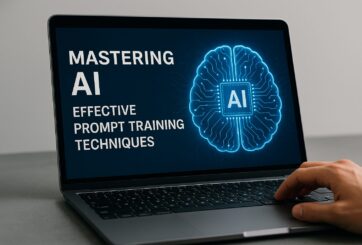
Research from Carnegie Mellon’s School of Computer Science suggests prompt engineering could be as important as coding Today’s generative artificial intelligence models can create everything from images to computer applications, but the quality of their output depends largely on the prompt a human user provides. Carnegie Mellon University researchers have proposed a new approach for teaching everyday users how to create these prompts and improving their interactions with generative artificial intelligence models. The method, called Requirement-Oriented Prompt Engineering (ROPE), shifts…

A new quantum random number generator is almost 1000 times faster than other generators and much smaller, promising to change data management and cybersecurity in several industries including health, finance, and defense A joint team of researchers led by scientists at King Abdullah University of Science and Technology (KAUST) and King Abdulaziz City for Science and Technology (KACST) has reported the fastest quantum random number generator (QRNG) to date based on international benchmarks. The QRNG, which passed the required randomness…

Very secure and highly efficient: encryption and decryption with luminescent perovskites To guarantee high data security, encryption must be unbreakable while the data remains rapidly and easily readable. A novel strategy for optical encryption/decryption of information has now been introduced in the journal Angewandte Chemie by a Chinese research team. It is based on compounds with carefully modulated luminescent properties that change in response to external stimuli. The compounds are hybrid two-dimensional organic-inorganic metal-halide perovskites, whose structure consists of inorganic…

Researchers at the University of Utah’s Department of Psychiatry and Huntsman Mental Health Institute today published a paper introducing RiskPath, an open source software toolkit that uses Explainable Artificial Intelligence (XAI) to predict whether individuals will develop progressive and chronic diseases years before symptoms appear, potentially transforming how preventive healthcare is delivered. XAI is an artificial intelligence system that can explain complex decisions in ways humans can understand. The new technology represents a significant advancement in disease prediction and prevention…
 Feedback
