



Feeding 9 Billion: Innovations in Agricultural Modeling
What is the future direction for agent-based systems, one of the most important software R&D areas in recent years? Drawing from a body of some 200 industry and academic organisations, a European project has released a strategic roadmap that hopes to guide evolution of the field over the next decade.
AgentLink III, as its name suggests, was the third project in the series and author of the roadmap. Funded by the IST programme, it addressed the current state-of-the-art and postulated likely future directions for agent-based technologies, an activity seen as essential to help industry target its investment and to inform policy-makers on areas of particular importance.
In essence, an agent is an autonomous software system: a system that can decide for itself what it needs to do. Underpinning many aspects of broader information technology, some of the most compelling developments in IT – the semantic Web, ambient intelligence, the Grid, autonomic systems – require agent technologies or something similar for their realisation.
Roadmap coordinator Michael Luck of Southampton University in the UK gave some examples of how agent-based computing has already helped some project partners in their business. “Daimler-Chrysler for example implemented an agent-based system on one factory floor to allow individual workpieces to be directed dynamically around the production area. The intention was to implement flexible manufacturing to meet rapidly changing operations targets. The result was a 10 per increase in productivity.”
Another example, he says, is that of a shipping company that needed to improve its management of shipping routes for oil tankers. “By modelling each tanker as an agent, the company was able to develop much better simulations of the operating environment, helping them to react more immediately to changing circumstances.”
How rapidly business adopts agent technologies from this point depends on how fast and how well such technologies can be linked to existing and proven software. Luck believes that the real challenges to further take-up are cultural or conceptual. “Very often, the difficulty in implementation is the need for a new way of thinking, a re-look at the way people do things.”
He warns, however, of dangers in the growing ubiquity of agent-based computing. Now that such applications are spreading throughout industry, he believes, we are at risk of losing focus as agent-based applications become embedded into ever-larger, and sometimes proprietary, systems.
Luck stresses the importance of remembering that all of these larger technologies still use software agents. “As agent-based systems become ‘sucked up’ into larger infrastructures, they will no longer be recognised as agent-based technologies. The risk is that we lose the ability to think laterally as ever-larger systems narrow the potential for development.”
“The question is whether in ten years time we’ll still be using the term ‘agents’? I’m certain that we will be using agent-based technologies, even if by then they go by another name.”



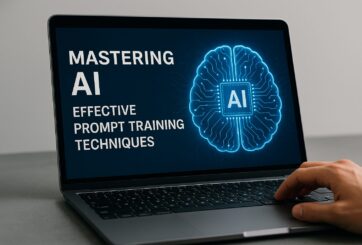
Research from Carnegie Mellon’s School of Computer Science suggests prompt engineering could be as important as coding Today’s generative artificial intelligence models can create everything from images to computer applications, but the quality of their output depends largely on the prompt a human user provides. Carnegie Mellon University researchers have proposed a new approach for teaching everyday users how to create these prompts and improving their interactions with generative artificial intelligence models. The method, called Requirement-Oriented Prompt Engineering (ROPE), shifts…

A new quantum random number generator is almost 1000 times faster than other generators and much smaller, promising to change data management and cybersecurity in several industries including health, finance, and defense A joint team of researchers led by scientists at King Abdullah University of Science and Technology (KAUST) and King Abdulaziz City for Science and Technology (KACST) has reported the fastest quantum random number generator (QRNG) to date based on international benchmarks. The QRNG, which passed the required randomness…

Very secure and highly efficient: encryption and decryption with luminescent perovskites To guarantee high data security, encryption must be unbreakable while the data remains rapidly and easily readable. A novel strategy for optical encryption/decryption of information has now been introduced in the journal Angewandte Chemie by a Chinese research team. It is based on compounds with carefully modulated luminescent properties that change in response to external stimuli. The compounds are hybrid two-dimensional organic-inorganic metal-halide perovskites, whose structure consists of inorganic…

Researchers at the University of Utah’s Department of Psychiatry and Huntsman Mental Health Institute today published a paper introducing RiskPath, an open source software toolkit that uses Explainable Artificial Intelligence (XAI) to predict whether individuals will develop progressive and chronic diseases years before symptoms appear, potentially transforming how preventive healthcare is delivered. XAI is an artificial intelligence system that can explain complex decisions in ways humans can understand. The new technology represents a significant advancement in disease prediction and prevention…
 Feedback
