



Feeding 9 Billion: Innovations in Agricultural Modeling
New computer software to teach people with learning disabilities the basic skills needed for everyday activities like shopping and crossing roads has been developed by researchers at The University of Nottingham.
Using a specially adapted joystick and the click of a mouse, people with learning disabilities can put money into a trolley, navigate themselves around a three-dimensional computer-generated supermarket and find items they need on their shopping list.
In another 3-D street scene program they can practise crossing the road in a number of different scenarios, including using a zebra crossing, a pelican crossing and safely crossing without help near a crossroads.
A computer game dubbed ’Running Man’ has been written, in which users need to move a character across a two-dimensional screen, using a switch to make the character jump obstacles.
The software, which will be on display at an open morning being held in Bilborough later this week, has been developed by a team led by Professor Penny Standen in the University’s Division of Rehabilitation and Ageing, and computer scientist David Brown at Nottingham Trent University. It aims to make computers easier to use for people with learning disabilities who may also have some physical impairment, teach them new social and health and safety skills and develop cognitive abilities such as reaction time and attention span.
The research has been funded by grants from organisations including the Economics and Social Sciences Research Council (ESRC), the Engineering and Physical Sciences Research Council (EPSRC), the European Social Fund and the Learning Skills Council.
Professor Standen said: “For many of us activities like going to the shops or crossing the road are very simple tasks that we wouldn’t think twice about. However, for someone who has severe learning disabilities, which may include a limited use of language, and, in some cases, some form of physical impairment, it can be quite a daunting experience.
“Our studies have shown that through the use of this new software, the skills and abilities of the people with learning disabilities who worked with us on this research did improve. The software provides activities that are educational but also fun, therapeutic and stimulating.”



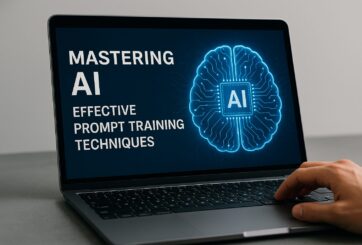
Research from Carnegie Mellon’s School of Computer Science suggests prompt engineering could be as important as coding Today’s generative artificial intelligence models can create everything from images to computer applications, but the quality of their output depends largely on the prompt a human user provides. Carnegie Mellon University researchers have proposed a new approach for teaching everyday users how to create these prompts and improving their interactions with generative artificial intelligence models. The method, called Requirement-Oriented Prompt Engineering (ROPE), shifts…

A new quantum random number generator is almost 1000 times faster than other generators and much smaller, promising to change data management and cybersecurity in several industries including health, finance, and defense A joint team of researchers led by scientists at King Abdullah University of Science and Technology (KAUST) and King Abdulaziz City for Science and Technology (KACST) has reported the fastest quantum random number generator (QRNG) to date based on international benchmarks. The QRNG, which passed the required randomness…

Very secure and highly efficient: encryption and decryption with luminescent perovskites To guarantee high data security, encryption must be unbreakable while the data remains rapidly and easily readable. A novel strategy for optical encryption/decryption of information has now been introduced in the journal Angewandte Chemie by a Chinese research team. It is based on compounds with carefully modulated luminescent properties that change in response to external stimuli. The compounds are hybrid two-dimensional organic-inorganic metal-halide perovskites, whose structure consists of inorganic…

Researchers at the University of Utah’s Department of Psychiatry and Huntsman Mental Health Institute today published a paper introducing RiskPath, an open source software toolkit that uses Explainable Artificial Intelligence (XAI) to predict whether individuals will develop progressive and chronic diseases years before symptoms appear, potentially transforming how preventive healthcare is delivered. XAI is an artificial intelligence system that can explain complex decisions in ways humans can understand. The new technology represents a significant advancement in disease prediction and prevention…
 Feedback
