



Feeding 9 Billion: Innovations in Agricultural Modeling
Computers just respond to commands, never “thinking” about the consequences. A new software language, however, promises to enable computers to reason much more precisely and thus better reflect subtleties intended by commands of human operators. Developed by National Institute of Standards and Technology (NIST) researchers and colleagues in France, Germany, Japan and the United Kingdom, the process specification language software, known as ISO 18629, should make computers much more useful in manufacturing.
ISO 18629 uses artificial intelligence (AI) and language analysis to represent computer commands in the context of a manufacturing plan. Researchers have incorporated approximately 300 concepts, such as “duration” and “sequence,” into its software structure. Computers using software with this expanded, though still primitive AI capacity, can act on a word’s “meaning,” interpreting a command almost like a person.
For instance, a person who hears the commands “paint it, before shipping it” and “turn on the coolant, before milling” understands that the word “before” has slightly different meanings in these two different contexts. In the first command, it is understood that painting and drying must be completed prior to the next action, shipping. In the second command, however, the first action, turning on the coolant, continues after the milling starts. ISO 18629 supports computer systems with this type of rudimentary understanding of context-specific language.
The ISO 18629 language is especially suited for the exchange of process planning, validation, production scheduling and control information for guiding manufacturing processes. The International Organization for Standardization (ISO), which already has approved six sections of the fledging standard, is currently reviewing the last of its three sections. Once the expected ISO approval is given, software vendors will begin building a variety of manufacturing systems that conform to ISO 18629.



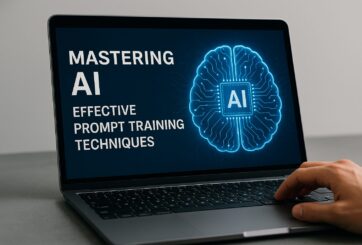
Research from Carnegie Mellon’s School of Computer Science suggests prompt engineering could be as important as coding Today’s generative artificial intelligence models can create everything from images to computer applications, but the quality of their output depends largely on the prompt a human user provides. Carnegie Mellon University researchers have proposed a new approach for teaching everyday users how to create these prompts and improving their interactions with generative artificial intelligence models. The method, called Requirement-Oriented Prompt Engineering (ROPE), shifts…

A new quantum random number generator is almost 1000 times faster than other generators and much smaller, promising to change data management and cybersecurity in several industries including health, finance, and defense A joint team of researchers led by scientists at King Abdullah University of Science and Technology (KAUST) and King Abdulaziz City for Science and Technology (KACST) has reported the fastest quantum random number generator (QRNG) to date based on international benchmarks. The QRNG, which passed the required randomness…

Very secure and highly efficient: encryption and decryption with luminescent perovskites To guarantee high data security, encryption must be unbreakable while the data remains rapidly and easily readable. A novel strategy for optical encryption/decryption of information has now been introduced in the journal Angewandte Chemie by a Chinese research team. It is based on compounds with carefully modulated luminescent properties that change in response to external stimuli. The compounds are hybrid two-dimensional organic-inorganic metal-halide perovskites, whose structure consists of inorganic…

Researchers at the University of Utah’s Department of Psychiatry and Huntsman Mental Health Institute today published a paper introducing RiskPath, an open source software toolkit that uses Explainable Artificial Intelligence (XAI) to predict whether individuals will develop progressive and chronic diseases years before symptoms appear, potentially transforming how preventive healthcare is delivered. XAI is an artificial intelligence system that can explain complex decisions in ways humans can understand. The new technology represents a significant advancement in disease prediction and prevention…
 Feedback
