



Feeding 9 Billion: Innovations in Agricultural Modeling
The Finnish company Deltabit Oy is creating awareness of access-control systems that are replacing traditional keys. A fingerprint already opens the door to keep-fit rooms at Tampere, Finland.
Deltabit Oy has been developing systems and applications based on fingerprint recognition for more than six years. The basic idea is the keyless concept. Fingerprint recognition can be used in access control for opening doors, controlling burglar alarms and supervising working hours. The only limitations are those set by the imagination.
“Our focus in the field of biometric identification is on entrance control systems, customer-management systems and on patient and personal identification systems at hospitals,” says managing director Jouna Järviö.
A solution for every home
The solutions that Deltabit develops are easy to use. Markets are to be found where strong identification is needed.
“With biometric identification the person to be identified does not need to carry anything. A mere finger is enough. Recognition is very easy, quick and reliable. You can’t forget or lose a finger, nor can you lend it to a friend,” Järviö says.
Deltabit is at present developing a simple, one-door biometric entrance control unit that can be used with low-rise housing, terraced dwellings and blocks of flats. A keyless solution that is suitable for every home is expected to be coming onto the market at the beginning of 2005.
“A recognition system is being designed for libraries in which a fingerprint will replace the traditional library card. We’re also developing a biometric regular-customer system for restaurants.”
Promising field, little competition
A promising future lies ahead for biometric identifiers. Yet competition in the field is minimal. In Scandinavia, besides Deltabit, there is only one other company in the same business. Companies are focusing on western Europe, the United States and the Far East. Deltabit’s foothold on the market is increasing.
“In five to seven years’ time biometric identifiers will be a strong factor alongside present identification. It’s not beyond of the realms of possibility that biometric identification will replace traditional methods.



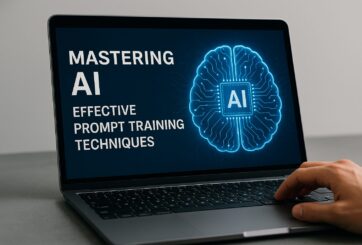
Research from Carnegie Mellon’s School of Computer Science suggests prompt engineering could be as important as coding Today’s generative artificial intelligence models can create everything from images to computer applications, but the quality of their output depends largely on the prompt a human user provides. Carnegie Mellon University researchers have proposed a new approach for teaching everyday users how to create these prompts and improving their interactions with generative artificial intelligence models. The method, called Requirement-Oriented Prompt Engineering (ROPE), shifts…

A new quantum random number generator is almost 1000 times faster than other generators and much smaller, promising to change data management and cybersecurity in several industries including health, finance, and defense A joint team of researchers led by scientists at King Abdullah University of Science and Technology (KAUST) and King Abdulaziz City for Science and Technology (KACST) has reported the fastest quantum random number generator (QRNG) to date based on international benchmarks. The QRNG, which passed the required randomness…

Very secure and highly efficient: encryption and decryption with luminescent perovskites To guarantee high data security, encryption must be unbreakable while the data remains rapidly and easily readable. A novel strategy for optical encryption/decryption of information has now been introduced in the journal Angewandte Chemie by a Chinese research team. It is based on compounds with carefully modulated luminescent properties that change in response to external stimuli. The compounds are hybrid two-dimensional organic-inorganic metal-halide perovskites, whose structure consists of inorganic…

Researchers at the University of Utah’s Department of Psychiatry and Huntsman Mental Health Institute today published a paper introducing RiskPath, an open source software toolkit that uses Explainable Artificial Intelligence (XAI) to predict whether individuals will develop progressive and chronic diseases years before symptoms appear, potentially transforming how preventive healthcare is delivered. XAI is an artificial intelligence system that can explain complex decisions in ways humans can understand. The new technology represents a significant advancement in disease prediction and prevention…
 Feedback
