



Feeding 9 Billion: Innovations in Agricultural Modeling
If you are touring in Finnish Lapland, you no longer need to shiver outside when watching the heavens in order to see the Northern Lights. Information about the Northern Lights can now be received directly into a mobile phone via the world’s first Aurora Borealis Alarm System.
“This is a service in which local beliefs, the natural surroundings, and technology are combined in an interesting way. Asian tourists in particular are interested in the system,” says Miikka Raulo, the managing director of the Lapland Centre of Expertise for the Experience Industry.
In practice the service operates fairly simply. A tourist can order the service on the Internet in his own country. Having come to Finland, he hires a telephone for the service at the airport. At the hotel the tourist receives information about seeing the Northern Lights in the form of a text message on his telephone. The information is transmitted by a sensor monitoring the sky.
Raulo says that the best time to see the Northern Lights in the Rovaniemi area is between November and March – on average every other day.
The northern lights – What are they?
The Northern Lights are a phenomenon that is seen in the skies on clear, dark nights in the Arctic and Antarctic regions. Scientists say that they are normally created at a height of 100 kilometres, when electric particles (electrons and protons) accelerated by the Earth’s magnetic field collide with molecules of air. These release some of the energy that is obtained in the form of visible light.
Different cultures hold many beliefs about the Northern Lights. Lapps have believed that the Northern Lights have a special quality to settle disagreements. Asians believe they increase fertility, while the Japanese believe that children conceived under the Northern Lights are lucky.



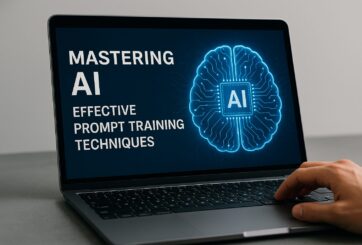
Research from Carnegie Mellon’s School of Computer Science suggests prompt engineering could be as important as coding Today’s generative artificial intelligence models can create everything from images to computer applications, but the quality of their output depends largely on the prompt a human user provides. Carnegie Mellon University researchers have proposed a new approach for teaching everyday users how to create these prompts and improving their interactions with generative artificial intelligence models. The method, called Requirement-Oriented Prompt Engineering (ROPE), shifts…

A new quantum random number generator is almost 1000 times faster than other generators and much smaller, promising to change data management and cybersecurity in several industries including health, finance, and defense A joint team of researchers led by scientists at King Abdullah University of Science and Technology (KAUST) and King Abdulaziz City for Science and Technology (KACST) has reported the fastest quantum random number generator (QRNG) to date based on international benchmarks. The QRNG, which passed the required randomness…

Very secure and highly efficient: encryption and decryption with luminescent perovskites To guarantee high data security, encryption must be unbreakable while the data remains rapidly and easily readable. A novel strategy for optical encryption/decryption of information has now been introduced in the journal Angewandte Chemie by a Chinese research team. It is based on compounds with carefully modulated luminescent properties that change in response to external stimuli. The compounds are hybrid two-dimensional organic-inorganic metal-halide perovskites, whose structure consists of inorganic…

Researchers at the University of Utah’s Department of Psychiatry and Huntsman Mental Health Institute today published a paper introducing RiskPath, an open source software toolkit that uses Explainable Artificial Intelligence (XAI) to predict whether individuals will develop progressive and chronic diseases years before symptoms appear, potentially transforming how preventive healthcare is delivered. XAI is an artificial intelligence system that can explain complex decisions in ways humans can understand. The new technology represents a significant advancement in disease prediction and prevention…
 Feedback
