



Feeding 9 Billion: Innovations in Agricultural Modeling
Penn State researchers have developed a computer program that mimics the results when a human appraises a task as threatening and feels worried before starting.
Dr. Frank Ritter, associate professor in the School of Information Sciences and Technology (IST), says, “In this study, we used our program to mimic the results achieved by people who can be seen as having a type of math anxiety. However, the program could also be used to study the effects of feeling threatened or worried before driving a car, using a computer or other stressful task — and to help develop remedial strategies.”
The results were described in a paper, “Using Cognitive Modeling To Study Behavior Moderators: Pre-Task Appraisal and Anxiety,” presented this month at the 48th Annual Meeting of the Human Factors and Ergonomics Society in New Orleans. The authors are Ritter, Andrew Reifers, an IST doctoral student; Laura C. Klein, assistant professor of biobehavioral health, College of Health and Human Development; Karen Quigley, New Jersey Medical School, University of Medicine and Dentistry of New Jersey; and Mike Schoelles, Rensselaer Polytechnic Institute.
Ritter explains that, in general, when people appraise a task as threatening, they have greater difficulty processing information. On the other hand, people who appraise a task as challenging perceive themselves as having more than enough resources to perform the task, don’t respond with stress and perform well on the task.
For their study, the Penn State researchers developed a computer program that simulated how people who felt threatened would respond when asked to perform a serial subtraction problem (i.e., start with a four-digit number such as 2,522 and repeatedly subtract from it a specific one or two-digit number such as 7 or 13). The handicapped program matched fairly well the published data on humans threatened by the task: performance accuracy remained the same but performance speed decreased about 25 percent.
“The correspondence suggests that the modifications we made to the program to simulate feeling threatened and worried provides a plausible explanation for the decreased performance in people on this task,” Ritter explains.
He adds that the results also suggest two ways to help individuals to switch their pre-task appraisal from threatening to challenging. First, they could increase their knowledge through instruction and practice. Second, they could continuously check their results to bolster their confidence while they work. The study was supported by a grant from the Office of Naval Research.



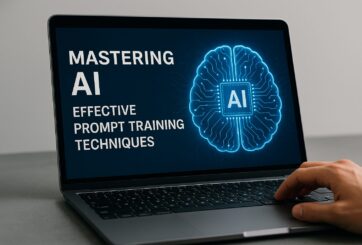
Research from Carnegie Mellon’s School of Computer Science suggests prompt engineering could be as important as coding Today’s generative artificial intelligence models can create everything from images to computer applications, but the quality of their output depends largely on the prompt a human user provides. Carnegie Mellon University researchers have proposed a new approach for teaching everyday users how to create these prompts and improving their interactions with generative artificial intelligence models. The method, called Requirement-Oriented Prompt Engineering (ROPE), shifts…

A new quantum random number generator is almost 1000 times faster than other generators and much smaller, promising to change data management and cybersecurity in several industries including health, finance, and defense A joint team of researchers led by scientists at King Abdullah University of Science and Technology (KAUST) and King Abdulaziz City for Science and Technology (KACST) has reported the fastest quantum random number generator (QRNG) to date based on international benchmarks. The QRNG, which passed the required randomness…

Very secure and highly efficient: encryption and decryption with luminescent perovskites To guarantee high data security, encryption must be unbreakable while the data remains rapidly and easily readable. A novel strategy for optical encryption/decryption of information has now been introduced in the journal Angewandte Chemie by a Chinese research team. It is based on compounds with carefully modulated luminescent properties that change in response to external stimuli. The compounds are hybrid two-dimensional organic-inorganic metal-halide perovskites, whose structure consists of inorganic…

Researchers at the University of Utah’s Department of Psychiatry and Huntsman Mental Health Institute today published a paper introducing RiskPath, an open source software toolkit that uses Explainable Artificial Intelligence (XAI) to predict whether individuals will develop progressive and chronic diseases years before symptoms appear, potentially transforming how preventive healthcare is delivered. XAI is an artificial intelligence system that can explain complex decisions in ways humans can understand. The new technology represents a significant advancement in disease prediction and prevention…
 Feedback
