



Feeding 9 Billion: Innovations in Agricultural Modeling
The answer is yes, and not only that: they can also evaluate what will be the most successful strategy for conflict resolution, including re-formulating their action, or evading confrontation. Argument is used by computer agents only as the last resort.
The effectiveness of argumentation-based negotiation (ABN) for computer agents operating in multi-agent systems is assessed in a new paper co-authored by Professor Nick Jennings of the School of Electronics and Computer Science at the University of Southampton. Professor Jennings will be presenting the paper next week in New York, at AAMAS 2004, one of the largest conferences in the world of computer research.
Agents are autonomous computer systems increasingly used in a wide range of industrial and commercial domains, including robotics, e-commerce, computer games, and information retrieval. They are regarded as one of the most significant new technologies in computer science–not only a promising new technology, but also a new way of thinking, fundamental to the successful development of the next generation of distributed, open and dynamic computer systems.
Professor Jennings is co-chair of AAMAS 2004, and leads a large UK contingent of computer scientists to the conference. He is one of the world’s leading exponents of agent technology and helped pioneer the use of agent-based techniques for real-world applications.
‘Conflicts are inevitable in a multi-agent system,’ says Professor Jennings, ‘in which autonomous entities pursue their own goals. If the agents are to be able to resolve these problems—which can arise due to pressure on resources or as a result of conflicts of information—then ABN provides a meaningful interaction, enabling the agents to work towards the best result.’
‘Artificial intelligence programmes of this kind can deal with difficult problems and aid humans in many difference environments. For this reason they are increasingly being used in the Internet, in our homes, and in the workplace,’ he adds ‘But to improve their performance, we need to ensure they have the ability to overcome real-world problems such as conflict.’
A crucial aspect of agents is their potential in e-commerce. ‘Worldwide markets become ever more complex,’ says Professor Jennings, ‘and time frames narrow. Companies are keen to automate parts of their activities and we are aiming to design programmes that can mirror and occasionally improve human decision-making.’



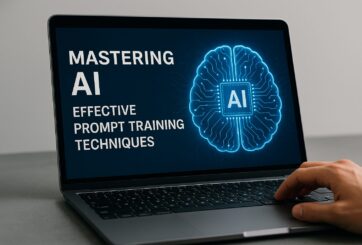
Research from Carnegie Mellon’s School of Computer Science suggests prompt engineering could be as important as coding Today’s generative artificial intelligence models can create everything from images to computer applications, but the quality of their output depends largely on the prompt a human user provides. Carnegie Mellon University researchers have proposed a new approach for teaching everyday users how to create these prompts and improving their interactions with generative artificial intelligence models. The method, called Requirement-Oriented Prompt Engineering (ROPE), shifts…

A new quantum random number generator is almost 1000 times faster than other generators and much smaller, promising to change data management and cybersecurity in several industries including health, finance, and defense A joint team of researchers led by scientists at King Abdullah University of Science and Technology (KAUST) and King Abdulaziz City for Science and Technology (KACST) has reported the fastest quantum random number generator (QRNG) to date based on international benchmarks. The QRNG, which passed the required randomness…

Very secure and highly efficient: encryption and decryption with luminescent perovskites To guarantee high data security, encryption must be unbreakable while the data remains rapidly and easily readable. A novel strategy for optical encryption/decryption of information has now been introduced in the journal Angewandte Chemie by a Chinese research team. It is based on compounds with carefully modulated luminescent properties that change in response to external stimuli. The compounds are hybrid two-dimensional organic-inorganic metal-halide perovskites, whose structure consists of inorganic…

Researchers at the University of Utah’s Department of Psychiatry and Huntsman Mental Health Institute today published a paper introducing RiskPath, an open source software toolkit that uses Explainable Artificial Intelligence (XAI) to predict whether individuals will develop progressive and chronic diseases years before symptoms appear, potentially transforming how preventive healthcare is delivered. XAI is an artificial intelligence system that can explain complex decisions in ways humans can understand. The new technology represents a significant advancement in disease prediction and prevention…
 Feedback
