



Feeding 9 Billion: Innovations in Agricultural Modeling
Researchers at Wright State University have developed a prototype device to help blind individuals “see.”
Nikolaos Bourbakis, Ph.D., Ohio Board of Regents Distinguished Professor of Information Technology at Wright State’s College of Engineering and Computer Science is the principal investigator. The project is a cooperative venture with Arizona State University (ASU).
“Our object is to develop intelligent assistants that can help blind and visually impaired individuals efficiently conduct daily tasks, such as reading a book or newspaper and efficiently accessing the Web and participating in classes,” explained Bourbakis, who has been involved in computer engineering eye research for 20 years.
Tyflos, the Greek word for blind, is the name of the portable, wearable device Bourbakis has developed. The partnering project at ASU is called iLearn. A tiny camera is mounted to glasses and connected by a thin wire to a modified lap-top computer the individual carries on his or her back. The Tyflos system operates by identifying the images “seen” by the camera and converting this to audio information the subject hears from small wires connected from the backpack to the ear. A small microphone is attached for receiving commands or requests from the user.
Bourbakis, who started on this project in 1995, plans to work with the WSU Office of Disability Services to test the device’s capabilities on visually impaired students. In addition, he is working on an extension of the Tyflos system that enables blind individuals to independently navigate their working and living environments. Two future extensions of the Tyflos system will offer writing and drawing assistance that will enable the visually impaired to visually express their artistic talent beyond the usual levels.
“The Tyflos camera captures images from the surroundings, and the portable computer reconstructs the 3D space for motion detection, body tracing, face recognition and moving objects,” explained Bourbakis, who also directs the Information Technology Research Institute and the Assistive Technology Research Laboratory at Wright State.
“This will make it possible for the blind and vision impaired to improve their independent mobility and social interaction, while succeeding in their professional endeavors. It is a great feeling for visually impaired people to make the first call in a conversation, like hi John, rather than waiting for somebody to talk to them. We are using state-of-the-art computer vision and robotics technology that will help the users tremendously in recognizing faces, objects, reading books, surfing the Web and safely navigating in dynamic environments.”
He said the applications of the project are substantial, with an estimated 45 million blind individuals in the world, according to a World Health Report.
Funding for the project includes a $1.1 million National Science Foundation grant to ASU and Wright State. This was awarded last fall for four years.
For more details on Tyflos, contact Bourbakis at (937) 775-5138 or bourbaki@cs.wright.edu.



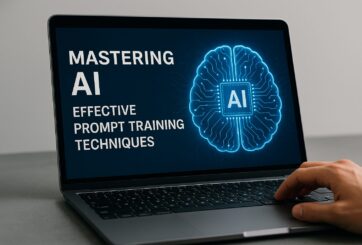
Research from Carnegie Mellon’s School of Computer Science suggests prompt engineering could be as important as coding Today’s generative artificial intelligence models can create everything from images to computer applications, but the quality of their output depends largely on the prompt a human user provides. Carnegie Mellon University researchers have proposed a new approach for teaching everyday users how to create these prompts and improving their interactions with generative artificial intelligence models. The method, called Requirement-Oriented Prompt Engineering (ROPE), shifts…

A new quantum random number generator is almost 1000 times faster than other generators and much smaller, promising to change data management and cybersecurity in several industries including health, finance, and defense A joint team of researchers led by scientists at King Abdullah University of Science and Technology (KAUST) and King Abdulaziz City for Science and Technology (KACST) has reported the fastest quantum random number generator (QRNG) to date based on international benchmarks. The QRNG, which passed the required randomness…

Very secure and highly efficient: encryption and decryption with luminescent perovskites To guarantee high data security, encryption must be unbreakable while the data remains rapidly and easily readable. A novel strategy for optical encryption/decryption of information has now been introduced in the journal Angewandte Chemie by a Chinese research team. It is based on compounds with carefully modulated luminescent properties that change in response to external stimuli. The compounds are hybrid two-dimensional organic-inorganic metal-halide perovskites, whose structure consists of inorganic…

Researchers at the University of Utah’s Department of Psychiatry and Huntsman Mental Health Institute today published a paper introducing RiskPath, an open source software toolkit that uses Explainable Artificial Intelligence (XAI) to predict whether individuals will develop progressive and chronic diseases years before symptoms appear, potentially transforming how preventive healthcare is delivered. XAI is an artificial intelligence system that can explain complex decisions in ways humans can understand. The new technology represents a significant advancement in disease prediction and prevention…
 Feedback
