



Feeding 9 Billion: Innovations in Agricultural Modeling
A “robot scientist” that generates hypotheses about the function of particular genes in baker’s yeast – and then designs and carries out experiments to test them – has been developed by a team of British scientists, according to new research published in the journal Nature today [15 January 2004].
“This research is very exciting as we have given the robot – under our supervision – the ability to design the experiments and interpret the data for us,” says Professor Ross King from the University of Wales, Aberystwyth. “There is increasing need for automation in the biological sciences and, although the problems we set for the robot were relatively simple, we have shown that it could be used to help solve real-world problems.”
The researchers set the robot the problem of discovering the function of different genes in baker’s yeast (Saccharomyces cerevisiae). The functions of about 30% of the 6,000 genes in yeast are still unknown and, with many of these genes thought to be common to the human genome, they could prove to be medically important in the future. The research involved using “knockout” strains of yeast that have had one gene removed. By observing how the yeast grows, or doesn’t grow, on defined chemical substrates, it is possible to start establishing different possible functions for the gene being investigated. “This is like trying to understand what the different components in a car do by removing them one by one, “ says Professor King.
The robot scientist generates a set of hypotheses from what it knows about biochemistry and then plans an experiment that will eliminate as many hypotheses as possible, as fast and as cheaply as possible. It conducts experiments by dispensing and mixing liquids and then measuring the growth of yeast using an adjacent plate reader that feeds the results back into the system. The robot then evaluates the results against the set of hypotheses, generates new hypotheses, and the process starts again – the same type of cycle human scientists use to understand the world.
Although artificial intelligence has made a number of significant contributions to scientific discovery over the past 30 years, its general impact on experimental science has been limited, but this may be about to change with the increased use of automation in scientific research. The need for automation is particularly important in the branch of science known as systems biology where scientists are trying to understand how genes work together to form living cells.



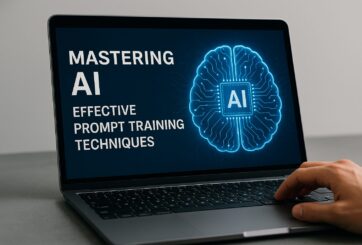
Research from Carnegie Mellon’s School of Computer Science suggests prompt engineering could be as important as coding Today’s generative artificial intelligence models can create everything from images to computer applications, but the quality of their output depends largely on the prompt a human user provides. Carnegie Mellon University researchers have proposed a new approach for teaching everyday users how to create these prompts and improving their interactions with generative artificial intelligence models. The method, called Requirement-Oriented Prompt Engineering (ROPE), shifts…

A new quantum random number generator is almost 1000 times faster than other generators and much smaller, promising to change data management and cybersecurity in several industries including health, finance, and defense A joint team of researchers led by scientists at King Abdullah University of Science and Technology (KAUST) and King Abdulaziz City for Science and Technology (KACST) has reported the fastest quantum random number generator (QRNG) to date based on international benchmarks. The QRNG, which passed the required randomness…

Very secure and highly efficient: encryption and decryption with luminescent perovskites To guarantee high data security, encryption must be unbreakable while the data remains rapidly and easily readable. A novel strategy for optical encryption/decryption of information has now been introduced in the journal Angewandte Chemie by a Chinese research team. It is based on compounds with carefully modulated luminescent properties that change in response to external stimuli. The compounds are hybrid two-dimensional organic-inorganic metal-halide perovskites, whose structure consists of inorganic…

Researchers at the University of Utah’s Department of Psychiatry and Huntsman Mental Health Institute today published a paper introducing RiskPath, an open source software toolkit that uses Explainable Artificial Intelligence (XAI) to predict whether individuals will develop progressive and chronic diseases years before symptoms appear, potentially transforming how preventive healthcare is delivered. XAI is an artificial intelligence system that can explain complex decisions in ways humans can understand. The new technology represents a significant advancement in disease prediction and prevention…
 Feedback
