



Feeding 9 Billion: Innovations in Agricultural Modeling
The Particle Physics and Astronomy Research Council has today announced GBP 16 million to create a massive computing Grid, equivalent to the world’s second largest supercomputer after Japan’s Earth Simulator computer. This Grid, known as GridPP2 will eventually form part of a larger European Grid, to be used to process the data deluge from CERN, the European Particle Physics Laboratory, when its new facility, the Large Hadron Collider (LHC), comes online in 2007.
GridPP is a collaboration of UK Particle Physicists and Computer Scientists working together to create a Grid for particle physics, enabling them to process the vast volumes of data generated in experiments. The LHC, a particle accelerator which will probe the nature of matter, is expected to generate data at a rate equivalent to 20 million CDs a year.
Professor Ian Halliday, Chief Executive of PPARC, said “GridPP2 will place UK particle physicists in a prime position to exploit physics from the Large Hadron Collider.”
“The GridPP2 Grid will address the future computing requirements of all the UK Particle Physics Experiments and should provide efficient sharing of resources between Particle Physics and other disciplines at the institutes.” added Steve Lloyd, GridPP Collaboration Board Chair.
Grid computing shares the resources of connected computers, much as the World Wide Web (also created at CERN) enables the sharing of information between computers. By connecting large numbers of computers together, particle physicists are able to run simulations and analysis in a fraction of the time it would take to run on a single machine. Such work can also be done on supercomputers, but as these are custom built they are expensive and in high demand. The benefit of Grid computing is that it is constructed from cheap units and can be expanded or reduced to fit the users’ needs.
Dr Neil Geddes, PPARC’s Director of E-Science said “Today’s money will be used to create a grid equivalent to 20,000 1GHz personal computers. This is the largest in the world to be funded so far.” For the past year, GridPP have been running a prototype grid or ‘testbed’ across ten UK sites. From this they have developed the middleware needed for a larger Grid.
“GridPP2 will test new Grid computing technologies on a scale that we could have barely considered two years ago.” said Tony Doyle, the GridPP Project Leader “The Grid deployed in phase 1 taught us about the importance of a series of testbeds where the software is incrementally integrated and tested within an annual deployment lifecycle. Running a stable large-scale grid service will be a major challenge and for this reason a key component of GridPP2 will be the establishment a core production team at the heart of deployment.”
Middleware is the programming that allows the software (the programmes the scientists are using) to take advantage of the hardware (the computing resources they need to access). Middleware tackles issues such as security (e.g. allowing outside users access to a site’s computers) and ‘brokering’ (breaking data up into packages to be sent around the country or even world for rapid processing).
GridPP’s testbed was incorporated into the LHC Computing Grid in September 2003, which was the first time a production grid was deployed world-wide. GridPP is also working with projects such as the EU-funded Enabling Grids for E-Science in Europe (EGEE) which will integrate current national, regional and thematic Grid efforts to create a seamless European Grid infrastructure for the support of the European Research Area.
The experience gained in the GridPP project forms the basis of the much wider deployment of scientific computing grids which we are seeing across UK Universities through the UK’s e-Science programme. Industry has also been quick to appreciate the benefits of these technologies.



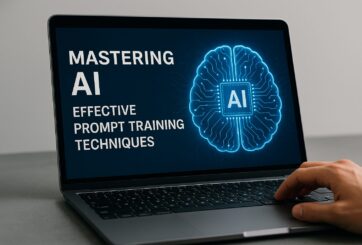
Research from Carnegie Mellon’s School of Computer Science suggests prompt engineering could be as important as coding Today’s generative artificial intelligence models can create everything from images to computer applications, but the quality of their output depends largely on the prompt a human user provides. Carnegie Mellon University researchers have proposed a new approach for teaching everyday users how to create these prompts and improving their interactions with generative artificial intelligence models. The method, called Requirement-Oriented Prompt Engineering (ROPE), shifts…

A new quantum random number generator is almost 1000 times faster than other generators and much smaller, promising to change data management and cybersecurity in several industries including health, finance, and defense A joint team of researchers led by scientists at King Abdullah University of Science and Technology (KAUST) and King Abdulaziz City for Science and Technology (KACST) has reported the fastest quantum random number generator (QRNG) to date based on international benchmarks. The QRNG, which passed the required randomness…

Very secure and highly efficient: encryption and decryption with luminescent perovskites To guarantee high data security, encryption must be unbreakable while the data remains rapidly and easily readable. A novel strategy for optical encryption/decryption of information has now been introduced in the journal Angewandte Chemie by a Chinese research team. It is based on compounds with carefully modulated luminescent properties that change in response to external stimuli. The compounds are hybrid two-dimensional organic-inorganic metal-halide perovskites, whose structure consists of inorganic…

Researchers at the University of Utah’s Department of Psychiatry and Huntsman Mental Health Institute today published a paper introducing RiskPath, an open source software toolkit that uses Explainable Artificial Intelligence (XAI) to predict whether individuals will develop progressive and chronic diseases years before symptoms appear, potentially transforming how preventive healthcare is delivered. XAI is an artificial intelligence system that can explain complex decisions in ways humans can understand. The new technology represents a significant advancement in disease prediction and prevention…
 Feedback
