



Feeding 9 Billion: Innovations in Agricultural Modeling
An innovative new software can detect and correct a database impaired by an attack while the database system continues to process transactions, says a Penn State researcher.
“We simulated attackers’ behaviors on a database and then monitored the response of the database,” said Dr. Peng Liu, assistant professor of information sciences and technology. “We can’t prevent attackers from getting in, but with this technology, the database can heal itself on-the-fly.”
Liu performed the research underlying the technology while a faculty member at the University of Maryland – Baltimore County. He has since established his research team, the Cyber Security Group, in Penn State’s School of Information Sciences and Technology. The team’s areas of expertise include network security, intrusion detection and masking, survivable systems and attack prediction.
All databases are vulnerable to being breached by unauthorized users, former employees or hackers looking for a challenge. With more databases than ever, experts expect the number of database attacks to continue to rise. That leaves at risk such data-intensive applications as e-commerce, air traffic control, command-and-control, and credit card billing systems.
Although many intrusions can be detected soon after the database is breached, the damage usually doesn’t stop with the initial transaction. Subsequent transactions and data updating can spread the damage.
Existing recovery software creates its own problems. Rolling back activity to the initial damage is expensive because the work of many unaffected transactions by good users will be lost, Liu said. Second, for commercial databases, suspending the database to clean up the damage is undesirable, and in many cases, unacceptable. International banks, for instance, need 24-7 access to account data.
The family of algorithms developed by Liu and others can detect single, multiple or simultaneous attacks. But it does more. It isolates malicious transactions, so that many benign ones are preserved from being affected and having to be re-executed. It also repairs the database by containing the set of corrupted data objects and then, by undoing or unwinding the direct and indirect effects of the attack.
The technology has another advantage: The software can be adapted for static and on-the-fly repairs. Because it’s dynamic, new transactions can continue even while the database is being repaired. Furthermore, the new technology is intelligent and adaptive.
“The database can adapt its own behavior and reconfigure itself based on the attack,” Liu said.
A prototype of this attack-resilient software is being tested by the Cyber Security Group and the U.S. Air Force.
Liu’s research was funded by the Air Force and the Defense Advanced Research Projects Agency. Subsequent grants have come from the National Science Foundation, the Air Force, DARPA and the U.S. Department of Energy.
The Penn State researcher and his co-authors, Paul Ammann and Sushil Jajodia, both of George Mason University, published their findings in the paper, “Recovery From Malicious Transactions,” in the September issue of IEEE Transactions on Knowledge and Data Engineering.



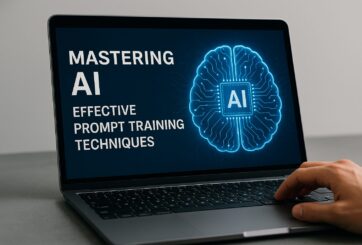
Research from Carnegie Mellon’s School of Computer Science suggests prompt engineering could be as important as coding Today’s generative artificial intelligence models can create everything from images to computer applications, but the quality of their output depends largely on the prompt a human user provides. Carnegie Mellon University researchers have proposed a new approach for teaching everyday users how to create these prompts and improving their interactions with generative artificial intelligence models. The method, called Requirement-Oriented Prompt Engineering (ROPE), shifts…
A new quantum random number generator is almost 1000 times faster than other generators and much smaller, promising to change data management and cybersecurity in several industries including health, finance, and defense A joint team of researchers led by scientists at King Abdullah University of Science and Technology (KAUST) and King Abdulaziz City for Science and Technology (KACST) has reported the fastest quantum random number generator (QRNG) to date based on international benchmarks. The QRNG, which passed the required randomness…

Very secure and highly efficient: encryption and decryption with luminescent perovskites To guarantee high data security, encryption must be unbreakable while the data remains rapidly and easily readable. A novel strategy for optical encryption/decryption of information has now been introduced in the journal Angewandte Chemie by a Chinese research team. It is based on compounds with carefully modulated luminescent properties that change in response to external stimuli. The compounds are hybrid two-dimensional organic-inorganic metal-halide perovskites, whose structure consists of inorganic…

Researchers at the University of Utah’s Department of Psychiatry and Huntsman Mental Health Institute today published a paper introducing RiskPath, an open source software toolkit that uses Explainable Artificial Intelligence (XAI) to predict whether individuals will develop progressive and chronic diseases years before symptoms appear, potentially transforming how preventive healthcare is delivered. XAI is an artificial intelligence system that can explain complex decisions in ways humans can understand. The new technology represents a significant advancement in disease prediction and prevention…
 Feedback
