Butterfly Farming to Help Save Rain Forest

The University of Warwick team will work with the Iwokrama International Centre for Rain Forest Conservation in Guyana. The conservation reserve around that centre and the surrounding North Rupununi District is a rich source of exotic butterflies that are sought after by many western butterfly farms and other institutions that exhibit collections of live butterflies. Each individual butterfly pupa that they can ship to one of these customers can be worth between 2 and 5 UK pounds.
The creation of a sustainable butterfly farming business would help preserve the local rain forest in two ways. Firstly the local population will have a sustainable business that allows them to turn away from other activities that would involve yet more forest clearance and secondly that butterfly farming actually needs to conserve the rainforest because that is the butterflies' preferred habitat.
The research will be led by Dr Doreen Winstanley and Neil Naish from Warwick HRI, the University of Warwick's plant research arm who already have experience of butterfly farming through their University spin out company – Warwick Insect Technologies Ltd. They will undertake a biodiversity survey of the butterfly community and their host plants within the Iwokrama International Centre for Rain Forest Conservation and Development Reserve.
The survey will work with the indigenous Amerindian communities within the reserve and the surrounding North Rupununi District with the ultimate aim of enhancing the livelihoods of the 5000 individuals in the 16 rainforest communities in the Iwokrama forest through the sustainable development of a low-tech butterfly farming industry. The butterfly farming will be set up as a co-operative within the North Rupununi District of Guyana.
Media Contact
All latest news from the category: Ecology, The Environment and Conservation
This complex theme deals primarily with interactions between organisms and the environmental factors that impact them, but to a greater extent between individual inanimate environmental factors.
innovations-report offers informative reports and articles on topics such as climate protection, landscape conservation, ecological systems, wildlife and nature parks and ecosystem efficiency and balance.


Newest articles

Properties of new materials for microchips
… can now be measured well. Reseachers of Delft University of Technology demonstrated measuring performance properties of ultrathin silicon membranes. Making ever smaller and more powerful chips requires new ultrathin…

Floating solar’s potential
… to support sustainable development by addressing climate, water, and energy goals holistically. A new study published this week in Nature Energy raises the potential for floating solar photovoltaics (FPV)…
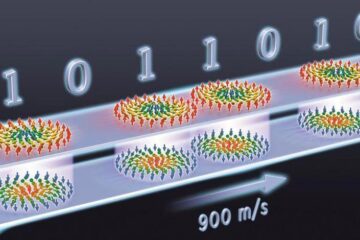
Skyrmions move at record speeds
… a step towards the computing of the future. An international research team led by scientists from the CNRS1 has discovered that the magnetic nanobubbles2 known as skyrmions can be…