



Feeding 9 Billion: Innovations in Agricultural Modeling
Within the context of ESA’s Polar View programme, funded through the Earthwatch GMES Service Element (GSE), the Finnish Environment Institute (SYKE) is using images from Earth observation satellites to provide snow maps of Finland, Sweden, Estonia, Latvia, Lithuania and parts of Western Russia and Belarus from the beginning of March until the end of May.
Satellite images are downlinked to the Arctic Research Centre of the Finnish Meteorological Institute (FMI) and then passed on to SYKE, which takes the image data and processes it further to create the snow maps.
SYKE's snow-mapping method produces information on fractional snow coverage for all non-mountainous areas, even heavily forested spots, with fine resolution. The maps are published on the SYKE website as soon as they are compiled, usually within four to five hours of satellite overpass.
Because snow is vital to the water cycle, predicting when and how snow will melt and be released into local ecosystems is very useful. For instance several Finnish regional environment centres and the Estonian Meteorological Institute are using the snow maps on a daily basis for hydrological modelling, flood forecasting and water resources management.
The snow maps are also used by the commercial sector for activities such as managing hydroelectric power production and estimating how much time is left in the season for winter sports.
In 2008, the mapping project will expand to include parts of Poland.




Earthquakes in the American state of Utah, the Soultz-sous-Forêts region of France or in the Dutch province of Groningen should not be able to occur even if the subsurface has been exploited for decades. This is because the shallow subsurface behaves in such a way that faults there become stronger as soon as they start moving. At least that is what geology textbooks teach us. And so, in theory, it should not be possible for earthquakes to occur. So why…
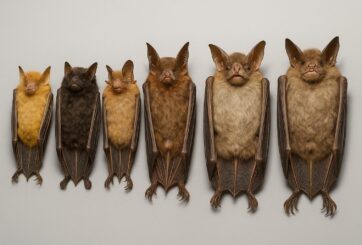
Just in time for Halloween, researchers from the Royal Ontario Museum (ROM), the Field Museum in Chicago, and Lawrence University in Wisconsin have announced the discovery of six new species of bats. These newly identified species, all found in the Philippines, belong to the group known as tube-nosed bats—a fascinating and diverse branch of the mammal family tree. Expanding the Tree of Life Formally recognized as new species through morphological and genetic analysis, this discovery expands the already impressive global…
In a recent study published today in the European Geosciences Union (EGU) journal Biogeosciences, scientists have confirmed that mercury pollution from artisanal and small-scale gold mining (ASGM) is contaminating food crops not through the soil, as previously believed, but directly from the air. Driven by the surging price of gold, which has increased by more than tenfold since 2000, the rapid expansion of unregulated mining in these regions raises urgent questions about food security, human health, and environmental justice The…
A new study from Iceland’s Surtsey island shows that birds carried most of the plants that colonised the island, challenging long-held beliefs that seed or fruit shape determines how plants spread — offering fresh insight into life’s adaptation to c When the volcanic island of Surtsey rose from the North Atlantic Ocean in 1963, it offered scientists a once-in-a-lifetime opportunity to observe how life takes hold on a brand-new and barren land. For decades, ecologists believed that plants’ ability to…
 Feedback
