



Feeding 9 Billion: Innovations in Agricultural Modeling
The findings are being published this week in an article in Proceedings of the National Academy of Sciences in the U.S. With the aid of microarray technology, the scientists have managed to monitor the expression of all of the roughly 2,000 genes in microorganisms that grow at 80o C, so-called hyperthermophiles.
These organisms, from the Sulfolobus genus, represent life’s third evolutionary line, the archaea, and are found in hots springs all over the world, for instance in the vicinity of the volcano Vesuvius outside Naples, in Iceland, and in Yellowstone National Park in the U.S. The extreme living conditions, where these organisms grow optimally in hot acid, make them interesting not only because of their unique biology but also as a model system in theories of the origins of life in warm environments during the early development of the earth.
“Knowledge of these organisms is also of interest in our search for life on other planets and moons, with their extreme environments,” says Rolf Bernander, professor of molecular evolution at the Center for Evolutionary Biology (EBC), who is responsible for the study, together with doctoral candidate Magnus Lundgren.
They have identified some 160 genes that are specifically activated at various stages when the cells produce a new copy of the chromosome (replication), segregate two daughter chromosomes (mitosis), and then divide (cytokinesis). The team has previously shown that the chromosomes in Sulfolubus species, unlike those in all other species that lack a cell nucleus, are replicated from three different starting points instead of a single one. This was surprising, since this was previously seen as one of the most important borderlines between organisms with or without cell nuclei. Thus, these unique organisms lack cell nuclei, but nevertheless evince replication and cell cycles similar to those of higher organisms.
“Together with the fact that many of archaea genes are very similar to their counterparts in higher organisms, this means that the findings may be of significance in our understanding of cell growth and cell-cycle regulation in humans, for example,” says Rolf Bernander.




Earthquakes in the American state of Utah, the Soultz-sous-Forêts region of France or in the Dutch province of Groningen should not be able to occur even if the subsurface has been exploited for decades. This is because the shallow subsurface behaves in such a way that faults there become stronger as soon as they start moving. At least that is what geology textbooks teach us. And so, in theory, it should not be possible for earthquakes to occur. So why…
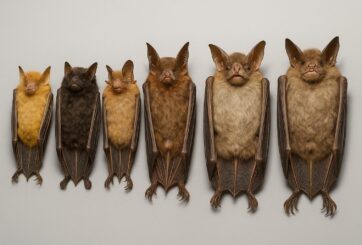
Just in time for Halloween, researchers from the Royal Ontario Museum (ROM), the Field Museum in Chicago, and Lawrence University in Wisconsin have announced the discovery of six new species of bats. These newly identified species, all found in the Philippines, belong to the group known as tube-nosed bats—a fascinating and diverse branch of the mammal family tree. Expanding the Tree of Life Formally recognized as new species through morphological and genetic analysis, this discovery expands the already impressive global…
In a recent study published today in the European Geosciences Union (EGU) journal Biogeosciences, scientists have confirmed that mercury pollution from artisanal and small-scale gold mining (ASGM) is contaminating food crops not through the soil, as previously believed, but directly from the air. Driven by the surging price of gold, which has increased by more than tenfold since 2000, the rapid expansion of unregulated mining in these regions raises urgent questions about food security, human health, and environmental justice The…
A new study from Iceland’s Surtsey island shows that birds carried most of the plants that colonised the island, challenging long-held beliefs that seed or fruit shape determines how plants spread — offering fresh insight into life’s adaptation to c When the volcanic island of Surtsey rose from the North Atlantic Ocean in 1963, it offered scientists a once-in-a-lifetime opportunity to observe how life takes hold on a brand-new and barren land. For decades, ecologists believed that plants’ ability to…
 Feedback
