



Feeding 9 Billion: Innovations in Agricultural Modeling
On 21 and 22 March 2006, the Strategic Implementation Team (SIT) of the Committee on Earth Observation Satellites (CEOS) will be holding its 18th meeting at ESA’s ESRIN in Frascati.
Members of CEOS-SIT include the some of the most important space agencies in the world – NASA, NOAA, ESA, JAXA of Japan, ISRO of India and CONAE of Argentina. CEOS was set up in 1984 under the auspices of the G-7 group to coordinate space agency programmes in the field of Earth Observation. ESA chairs the CEOS SIT (Strategy Implementation Team) for a two-year period, until November 2007, with the meetings of SIT chaired by Dr. Volker Liebig, Director of Earth Observation at ESA.
The 18th meeting of the CEOS Strategic Implementation Team (SIT-18) is characterised by a very busy agenda. Three major items will be addressed: the response of space agencies worldwide to the needs of the Global Climate Observing System (GCOS), the implementation of the space components of the 2006 work plan of the Global Earth Observation System of Systems (GEOSS) and the long-term future of CEOS in its role as the primary mechanism for carrying out the GEOSS Implementation Plan on a timescale of ten years and more.
The 10-year implementation plan of GEOSS was developed by the Group on Earth Observations (GEO) – an international body comprised of more than sixty countries worldwide – together with some 30 plus international organisations such as CEOS, WMO, UNESCO and the UN Environment Programme. It will provide politicians and decision makers with the tools to implement environmental and sustainable development policies in an integrated international approach.
The 2006 plan involves the use of Earth Observation in all nine societal benefiting areas addressed by GEOSS, including natural disasters, energy, health, weather forecasting, climate and sustainable development and maintenance of biodiversity. It also includes the dissemination of collected data.
In particular, the proposed SIT response to the Climate needs of GEOSS and GCOS is crucial in preparation for the next meeting of COP-12 (Conference of the Parties) / MOP-2 within the United Nations Framework Convention on Climate Change, to be held in November 2006 in Nairobi.




Earthquakes in the American state of Utah, the Soultz-sous-Forêts region of France or in the Dutch province of Groningen should not be able to occur even if the subsurface has been exploited for decades. This is because the shallow subsurface behaves in such a way that faults there become stronger as soon as they start moving. At least that is what geology textbooks teach us. And so, in theory, it should not be possible for earthquakes to occur. So why…
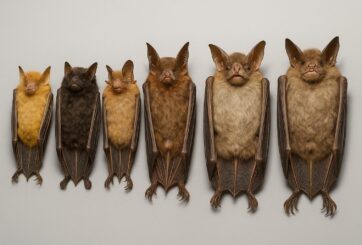
Just in time for Halloween, researchers from the Royal Ontario Museum (ROM), the Field Museum in Chicago, and Lawrence University in Wisconsin have announced the discovery of six new species of bats. These newly identified species, all found in the Philippines, belong to the group known as tube-nosed bats—a fascinating and diverse branch of the mammal family tree. Expanding the Tree of Life Formally recognized as new species through morphological and genetic analysis, this discovery expands the already impressive global…
In a recent study published today in the European Geosciences Union (EGU) journal Biogeosciences, scientists have confirmed that mercury pollution from artisanal and small-scale gold mining (ASGM) is contaminating food crops not through the soil, as previously believed, but directly from the air. Driven by the surging price of gold, which has increased by more than tenfold since 2000, the rapid expansion of unregulated mining in these regions raises urgent questions about food security, human health, and environmental justice The…
A new study from Iceland’s Surtsey island shows that birds carried most of the plants that colonised the island, challenging long-held beliefs that seed or fruit shape determines how plants spread — offering fresh insight into life’s adaptation to c When the volcanic island of Surtsey rose from the North Atlantic Ocean in 1963, it offered scientists a once-in-a-lifetime opportunity to observe how life takes hold on a brand-new and barren land. For decades, ecologists believed that plants’ ability to…
 Feedback
