



Feeding 9 Billion: Innovations in Agricultural Modeling
An academic from the University of Sheffield has produced the first glacial map of Britain, which could allow us to better predict climate change in the future. The map is published in the latest edition of the journal Boreas.
Dr Chris Clark, of the University’s Department of Geography, along with colleagues, has compiled over 150 years of scientific discovery to create the Glacial Map, which itself is the result of over ten years’ work. The map identifies over 20,000 geographical features including moraines, the movement of large rocks carried by the glacier (called erratics) and a huge system of ice-dammed lakes that existed over the Vale of York and the lowlands surrounding the Walsh.
Dr Clark explains, “The map is important from a scientific point of view, but also holds interest for people wanting to see how the glacier affected the landscape where they live.
“Glaciers are extremely important to climate change because we now know that ice sheets can actively change ocean circulation and climate over a short timescale. This isn’t just due to the ice sheets responding to climate changes, but also through their activities, such as delivering surges of icebergs into the ocean.
“If we can better understand how ice sheet behaviour has affected past climate, then we can better predict future climate change.”




Earthquakes in the American state of Utah, the Soultz-sous-Forêts region of France or in the Dutch province of Groningen should not be able to occur even if the subsurface has been exploited for decades. This is because the shallow subsurface behaves in such a way that faults there become stronger as soon as they start moving. At least that is what geology textbooks teach us. And so, in theory, it should not be possible for earthquakes to occur. So why…
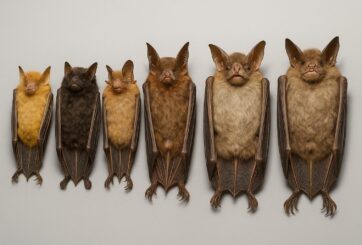
Just in time for Halloween, researchers from the Royal Ontario Museum (ROM), the Field Museum in Chicago, and Lawrence University in Wisconsin have announced the discovery of six new species of bats. These newly identified species, all found in the Philippines, belong to the group known as tube-nosed bats—a fascinating and diverse branch of the mammal family tree. Expanding the Tree of Life Formally recognized as new species through morphological and genetic analysis, this discovery expands the already impressive global…
In a recent study published today in the European Geosciences Union (EGU) journal Biogeosciences, scientists have confirmed that mercury pollution from artisanal and small-scale gold mining (ASGM) is contaminating food crops not through the soil, as previously believed, but directly from the air. Driven by the surging price of gold, which has increased by more than tenfold since 2000, the rapid expansion of unregulated mining in these regions raises urgent questions about food security, human health, and environmental justice The…
A new study from Iceland’s Surtsey island shows that birds carried most of the plants that colonised the island, challenging long-held beliefs that seed or fruit shape determines how plants spread — offering fresh insight into life’s adaptation to c When the volcanic island of Surtsey rose from the North Atlantic Ocean in 1963, it offered scientists a once-in-a-lifetime opportunity to observe how life takes hold on a brand-new and barren land. For decades, ecologists believed that plants’ ability to…
 Feedback
