



Feeding 9 Billion: Innovations in Agricultural Modeling
A devastating meteorite collision caused part of the Earth’s crust to flip inside out billions of years ago and left a dusting of a rare metal scattered on the top of the crater, says new U of T research.
The study, published in the June 3 issue of Nature, examines the devastating effects of meteorite impacts on the Earth’s evolution. Researchers from the University of Toronto and the Geological Survey of Canada studied the remains of a 250-kilometre wide crater in Sudbury, Ontario, known as the Sudbury Igneous Complex, caused by a collision with a Mount Everest-sized meteorite 1.8 billion years ago. They discovered that the meteorite burrowed deep into the Earth’s upper crust – which measures an average of 35 kilometres thick – and caused the upper crust to be buried under several kilometres of melted rock derived from the lower crust.
The dynamics of meteorite impacts remain a source of debate among researchers and, until now, there has been little hard evidence to prove a meteorite could pierce through the Earth’s upper crust and alter its compositional makeup. “It had not really been appreciated that large impacts would selectively move material from the bottom of the crust up to the top,” says lead researcher James Mungall, a U of T geology professor. “This has been suggested for the Moon at times in the past but ours is the first observational evidence that this process has operated on Earth.”
In the study, Mungall, his graduate student Jacob Hanley and Geological Survey researcher Doreen Ames concluded Sudbury Igneous Complex is predominantly derived from shock-melted lower crust rather than the average of the whole crust as has been previously supposed. The researchers discovered a subtle but significant enrichment of iridium, an extremely rare metal found mainly in the Earth’s mantle and in meteorites. Due to the low magnesium and nickel content found in the samples they concluded that the iridium came from the meteorite itself rather than the Earth’s mantle.
The discovery of the iridium allowed the researchers to paint a picture of what happened billions of years ago, when a meteorite collided with the earth at a velocity exceeding 40 kilometres per second and caused a shock melting of 27,000 cubic kilometres of the crust. “The impact punched a hole to the very base of the crust and the meteorite itself was probably vaporized,” says Mungall.
This collision, he says, caused a plume of iridium-enriched vaporized rock to surge up and recondense on top of the impact site. Simultaneously, the cavity collapsed within minutes or hours to form a multi-ring basin 200 to 300 kilometres in diameter and one to six kilometres deep.
“Picture a drop falling into a cup of milk, thus producing a bowl-shaped depression for a moment before the milk outside rushes back in to fill the hole,” says Mungall. “Now imagine that the falling drop of milk is a rock 10 kilometres in diameter, and the resulting depression is 30 to 40 kilometres deep.”
The Sudbury Basin is the second oldest very large impact crater site in the world but is one of the most accessible and well preserved. The oldest one, South Africa’s two-billion year-old Vredefort Crater, has eroded over time and only the basement remains. Another impact site, the Chicxulub Crater in Yucatan Peninsula, believed to be responsible for the extinction of the dinosaurs, lies buried under beds of limestone.
The study was funded in part by the Geoscience Laboratories of the Ontario Geological Survey and the Geological Survey of Canada.
CONTACT:
James Mungall
Dept of Geology
416-978-2975
mungall@geology.utoronto.ca
Karen Kelly
U of T Public Affairs
416-978-0260
k.kelly@utoronto.ca




Earthquakes in the American state of Utah, the Soultz-sous-Forêts region of France or in the Dutch province of Groningen should not be able to occur even if the subsurface has been exploited for decades. This is because the shallow subsurface behaves in such a way that faults there become stronger as soon as they start moving. At least that is what geology textbooks teach us. And so, in theory, it should not be possible for earthquakes to occur. So why…
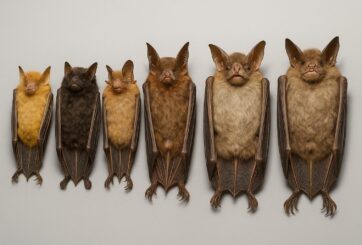
Just in time for Halloween, researchers from the Royal Ontario Museum (ROM), the Field Museum in Chicago, and Lawrence University in Wisconsin have announced the discovery of six new species of bats. These newly identified species, all found in the Philippines, belong to the group known as tube-nosed bats—a fascinating and diverse branch of the mammal family tree. Expanding the Tree of Life Formally recognized as new species through morphological and genetic analysis, this discovery expands the already impressive global…
In a recent study published today in the European Geosciences Union (EGU) journal Biogeosciences, scientists have confirmed that mercury pollution from artisanal and small-scale gold mining (ASGM) is contaminating food crops not through the soil, as previously believed, but directly from the air. Driven by the surging price of gold, which has increased by more than tenfold since 2000, the rapid expansion of unregulated mining in these regions raises urgent questions about food security, human health, and environmental justice The…
A new study from Iceland’s Surtsey island shows that birds carried most of the plants that colonised the island, challenging long-held beliefs that seed or fruit shape determines how plants spread — offering fresh insight into life’s adaptation to c When the volcanic island of Surtsey rose from the North Atlantic Ocean in 1963, it offered scientists a once-in-a-lifetime opportunity to observe how life takes hold on a brand-new and barren land. For decades, ecologists believed that plants’ ability to…
 Feedback
